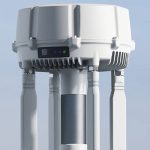
DJI is pushing deeper into the high end surveying and mapping sector after showcasing new field performance comparisons between its latest Zenmuse L3 LiDAR payload and the previous generation Zenmuse L2. According to data shared by the company, the newer system completed an 80 hectare survey mission in just 31 minutes compared to 55 minutes for the L2 while operating on the same DJI Matrice 400 platform and using identical mission settings.
From a technical standpoint, the numbers are significant because LiDAR productivity is no longer judged only by raw accuracy. Commercial drone operators today are increasingly focused on hectares covered per flight, battery efficiency, crew utilization, and total project turnaround time. In practical terms, reducing flight time from nearly an hour to half an hour can substantially improve operational economics for surveying firms running multiple missions per day.
Faster LiDAR Mapping Performance
DJI claims the Zenmuse L3 achieved roughly a 40% increase in operational efficiency over the Zenmuse L2 while maintaining point cloud quality. If those results translate consistently into real world conditions, the implications could be substantial for industries such as construction, mining, utility inspection, forestry, and large scale infrastructure mapping.
LiDAR payloads are often limited not by processing capability, but by battery endurance and flight logistics. A faster payload effectively allows operators to map larger territories using fewer battery swaps and fewer flights, which directly lowers labor and equipment downtime.
For enterprise drone service providers, this becomes especially important as competition intensifies and clients increasingly expect rapid data delivery.
Enterprise Drone Competition Intensifies
The broader enterprise drone market has become far more competitive over the past several years. While consumer drone growth has stabilized, industrial applications continue expanding across surveying, digital twins, powerline inspection, and precision construction workflows.
DJI appears to be positioning the Zenmuse L3 not simply as a sensor upgrade, but as a productivity multiplier. That distinction matters because many professional operators already own capable aircraft platforms. Convincing customers to upgrade now depends less on adding features and more on demonstrating measurable cost savings and mission efficiency improvements.
From an engineering perspective, this also reflects a wider industry trend toward integrated aerial mapping ecosystems where hardware, flight planning, RTK positioning, AI processing, and cloud analytics operate together as a single workflow.
Why Flight Time Matters
Surveying companies often operate under narrow weather windows and strict project timelines. Saving 20 to 25 minutes per mission can create meaningful advantages during large infrastructure or corridor mapping projects.
In some scenarios, operators may be able to complete two or three additional flights per day using the same crew and aircraft. Over time, that can improve return on investment for both the drone platform and the LiDAR payload itself.
Another important factor is pilot fatigue and operational simplicity. Shorter missions generally reduce logistical complexity in the field, particularly in remote or difficult terrain where battery management and transport become major operational concerns.
DJI Enterprise Market Position
DJI remains the dominant force in the global commercial drone market despite growing regulatory scrutiny in several countries. Industry estimates frequently place DJI’s global drone market share above 70%, with particularly strong penetration in surveying, inspection, public safety, and agriculture.
The company’s enterprise division has become increasingly important as commercial drone adoption accelerates worldwide. DJI’s Matrice series platforms, RTK enabled systems, thermal payloads, and LiDAR solutions are now widely used across construction, mining, utilities, infrastructure inspection, and precision mapping operations.
The Zenmuse L3 announcement also reinforces DJI’s strategy of expanding beyond hardware into full professional workflow ecosystems where speed, automation, and operational efficiency become the primary selling points.