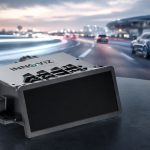
MicroVision is expanding deeper into semiconductor engineering with the launch of MicroVision Semiconductor, a new business unit dedicated to custom integrated circuit design for LiDAR, advanced driver assistance systems (ADAS), and industrial sensing applications. Rather than relying heavily on third party chip suppliers, the company is strengthening one of the most strategically important layers of modern perception technology by bringing more semiconductor expertise under its own roof.
The new division is based in Colorado Springs and originates from Black Forest Engineering, the semiconductor business acquired from Luminar. With more than three decades of experience in custom silicon development, the team is expected to play a key role in accelerating MicroVision’s next generation sensing platforms.
Custom ASIC development
MicroVision Semiconductor will provide end to end ASIC development services, including architecture, mixed signal and analog integrated circuit design, verification, and production support. The organization also specializes in high performance readout integrated circuits, photonic sensing technologies, and radiation hardened semiconductor designs for demanding environments.
Manufacturing support extends across several leading semiconductor foundries, including TSMC, Tower Semiconductor, and X FAB, allowing customers to select fabrication processes that best match performance, power consumption, and cost requirements.
According to the company, the engineering team has completed more than 300 custom integrated circuit designs during its history, serving customers in automotive, industrial, aerospace, and defense markets.
LiDAR 2.0 integration strategy
The new semiconductor division represents an important building block in MicroVision’s broader LiDAR 2.0 strategy.
Instead of treating LiDAR as a standalone sensor, the company is working toward tightly integrated perception platforms where optical components, semiconductor devices, signal processing electronics, and software are designed together. This level of vertical integration can improve overall system performance while reducing latency, power consumption, physical size, and manufacturing costs.
MicroVision is also continuing development of frequency modulated continuous wave (FMCW) LiDAR technology based on photonic integrated circuits, an architecture that many industry observers consider one of the long term directions for automotive perception because it can simultaneously measure distance and relative velocity.
Serving external customers
While the new organization will strengthen MicroVision’s internal product development, it will also remain an independent engineering partner for outside customers.
The division will continue designing custom semiconductor solutions for automotive manufacturers, industrial automation companies, defense contractors, and other organizations requiring specialized mixed signal integrated circuits. Maintaining an external customer portfolio provides an additional revenue opportunity while allowing the engineering team to remain engaged across multiple high technology industries.
Industry perspective
This move highlights an increasingly important trend across the autonomous vehicle and sensing industry. Competitive advantage is no longer determined only by sensor specifications such as range or resolution. Increasingly, the companies that control their semiconductor architecture gain greater flexibility to optimize performance, reduce production costs, accelerate product development, and differentiate their systems from competitors using off the shelf components.
As LiDAR suppliers compete for large automotive production contracts, ownership of the underlying silicon may become just as valuable as ownership of the optical technology itself. MicroVision’s investment suggests the next phase of competition will be driven as much by chip design as by laser engineering.
About MicroVision
Founded in 1993 and headquartered in Redmond, Washington, MicroVision develops perception technologies for automotive ADAS, autonomous driving, industrial automation, and smart infrastructure. The company is publicly traded on the NASDAQ under the ticker MVIS. Following its acquisition of Ibeo’s LiDAR business in 2023 and additional semiconductor assets acquired from Luminar, MicroVision has expanded its portfolio to include flash LiDAR, MOVIA and MAVIN sensor platforms, perception software, and advanced semiconductor technologies aimed at next generation sensing systems.
Source: microvision.com