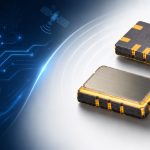
Bourns has expanded its RF component portfolio with the introduction of the new FDP2009N122157H4 LTCC diplexer, a miniature passive device designed to simplify signal routing inside modern multi band GNSS receivers. As satellite navigation equipment continues moving toward support for multiple frequencies and constellations, compact RF filtering components have become increasingly important for maintaining positioning accuracy while reducing overall system size.
LTCC diplexer for GNSS L band
The new diplexer is engineered specifically for GNSS front end architectures that require efficient separation of signals operating in the lower and upper portions of the L band. It covers frequency ranges of 1164 MHz to 1285 MHz and 1539 MHz to 1606 MHz, making it suitable for receivers processing the widely used L1, L2, and L5 navigation signals.
Instead of relying on multiple discrete filtering stages, the device combines filtering and signal routing into a single monolithic component. This allows hardware designers to simplify RF layouts while minimizing unwanted coupling between signal paths.
The diplexer offers several characteristics aimed at high precision positioning systems:
- Support for GNSS L1, L2, and L5 frequency bands.
- Maximum insertion loss of only 1.0 dB at 25°C.
- Minimum isolation of 20 dB between output ports.
- Minimum attenuation of 20 dB outside the intended passbands.
- Standard 50 Ω impedance for straightforward RF integration.
- Ultra compact package measuring just 2.0 × 1.25 × 0.9 mm.
These specifications make the component attractive for high sensitivity GNSS receivers where preserving weak satellite signals is essential.
Monolithic LTCC construction
One of the more important aspects of the new device is its Low Temperature Co Fired Ceramic (LTCC) construction. Unlike assemblies built from multiple discrete inductors and capacitors, LTCC technology embeds passive elements inside a multilayer ceramic structure.
This approach provides several engineering advantages:
- Reduced PCB footprint.
- Lower parasitic inductance and capacitance.
- Improved RF consistency between production batches.
- Higher reliability under vibration and temperature cycling.
- Simplified manufacturing and automated assembly.
For designers of compact GNSS hardware, minimizing parasitic effects becomes increasingly important as receivers evolve toward simultaneous multi frequency operation with higher sensitivity and more complex front end architectures.
Applications in precision positioning
The frequency coverage aligns well with many professional GNSS applications where multiple satellite bands are processed simultaneously to improve positioning accuracy and reduce atmospheric errors.
Potential applications:
- High precision GNSS surveying receivers.
- RTK and network RTK positioning systems.
- Precision agriculture guidance controllers.
- Timing synchronization equipment.
- Industrial positioning platforms.
- Navigation modules for autonomous machines.
As support for multi frequency tracking becomes standard across GPS, Galileo, BeiDou, and other global navigation systems, efficient RF front ends are becoming a critical differentiator in receiver performance.
Industry perspective
Although a diplexer may appear to be a relatively small component, its role inside a modern GNSS receiver is far from insignificant. Multi band positioning depends heavily on maintaining signal integrity before the RF chain reaches the low noise amplifier and baseband processing stages. Even modest improvements in insertion loss or isolation can translate into measurable gains in receiver sensitivity and overall positioning stability.
The continued miniaturization of RF components like this one also reflects a broader industry trend. Manufacturers are increasingly integrating more functionality into smaller footprints, allowing GNSS modules to deliver higher performance while consuming less board space. This is particularly valuable for UAVs, robotic systems, handheld survey instruments, and next generation agricultural guidance equipment where every square millimeter of PCB area matters.
About Bourns
Founded in 1947, Bourns Inc. is a privately held American electronics manufacturer headquartered in Riverside, California. The company develops a broad portfolio of electronic components including circuit protection devices, magnetic products, sensors, precision resistors, encoders, and RF solutions used across automotive, industrial, telecommunications, medical, aerospace, and navigation markets. Today, Bourns operates manufacturing and engineering facilities around the world and supplies components to customers in more than 100 countries, making it one of the established global suppliers in the passive electronics industry.