SpaceX has taken another major step toward becoming a nationwide wireless carrier, announcing plans to acquire low-band cellular spectrum that could allow Starlink Mobile to compete directly with AT&T, Verizon and T-Mobile. The move marks an expansion of the company’s satellite-to-phone strategy, combining orbital communications with conventional cellular infrastructure to deliver coverage both outdoors and inside buildings.
On October 8, 2026, SpaceX confirmed an agreement to purchase Grain Management’s nationwide 800 MHz spectrum portfolio. The transaction covers up to 14 MHz of paired spectrum and is subject to approval by the Federal Communications Commission (FCC).
The announcement follows a separate regulatory milestone earlier in the week, when the FCC authorized SpaceX to deploy a new constellation of up to 15,000 satellites designed to support direct-to-device communications. Together, these developments could transform Starlink Mobile from a supplementary satellite connectivity service into a more comprehensive wireless network.
SpaceX Acquires 800 MHz Spectrum
The agreement with Grain Management gives SpaceX access to frequencies in the 817-824 MHz and 862-869 MHz bands. These frequencies were previously held by T-Mobile before being transferred to Grain Management.
The acquisition addresses a significant limitation of satellite-based cellular coverage: reliable connectivity inside buildings and other environments where satellite signals are weakened or blocked.
Lower-frequency radio signals generally experience less propagation loss and penetrate common building materials more effectively than higher-frequency signals. This makes the 800 MHz band particularly valuable for providing broad geographic coverage and maintaining connections in locations where higher-frequency mobile networks may struggle.
SpaceX intends to use the frequencies as part of a hybrid wireless architecture, combining satellites in low Earth orbit with terrestrial radio equipment.
According to the company’s announcement, the new spectrum will complement its 2 GHz mobile satellite frequencies, which are intended to support higher-capacity direct-to-device communications. The 800 MHz layer would improve coverage and indoor reception, particularly through ground-based transmitters.
Starlink Mobile’s Hybrid Network
SpaceX is proposing a network architecture in which satellite and terrestrial infrastructure operate as complementary components rather than independent communications systems.
The satellite constellation would extend connectivity into rural regions, offshore areas, transportation corridors and locations where conventional cellular infrastructure is unavailable. Ground-based radio equipment would provide additional capacity and improve signal reliability in cities, residential neighborhoods and commercial buildings.
SpaceX has indicated that the terrestrial network could include cellular antennas installed on towers, rooftops and other structures. Smaller radio installations may also play a role where localized coverage is required.
The distinction is technically important. A satellite network can cover enormous geographic areas, but its capacity is shared among users within the satellite’s coverage footprint. Terrestrial cellular networks can reuse spectrum across many smaller cells, increasing the number of simultaneous connections they can support.
By combining these approaches, Starlink Mobile could offer geographically extensive coverage while relying on terrestrial equipment for higher traffic density and more demanding indoor environments.
However, integrating the two systems will require careful coordination of spectrum usage, interference management, network handovers and radio resource allocation. Satellite coverage alone cannot provide the same capacity as a dense network of terrestrial cell sites in heavily populated areas.
FCC Approves 15,000 Starlink Satellites
The spectrum announcement follows the FCC’s October 6 authorization allowing SpaceX to deploy and operate up to 15,000 satellites for its next-generation direct-to-device system.
The authorization covers mobile satellite services using licensed satellite spectrum as well as supplemental cellular coverage from space. It also supports associated communications functions, although certain regulatory requests remain subject to further consideration.
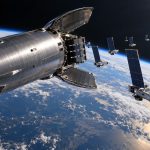
These satellites are intended to substantially improve the capabilities of Starlink Mobile compared with the first-generation constellation.
The existing service relies on approximately 650 dedicated direct-to-cell satellites and already supports messaging and limited mobile data services through telecommunications partners. In the United States, the service is available through T-Mobile under the T-Satellite brand.
Next-generation satellites are expected to offer greater communications capacity and support a broader range of mobile applications. The additional spectrum could also reduce reliance on frequencies leased from existing cellular operators.
Importantly, the FCC authorization permits the deployment of the constellation. It does not mean that all 15,000 satellites are already operational or that SpaceX has completed its planned nationwide terrestrial network.
EchoStar Spectrum Expands Starlink Mobile
SpaceX’s latest acquisition builds on its multibillion-dollar agreement with EchoStar, the parent company of Boost Mobile, to secure additional wireless spectrum for its satellite communications business.
The EchoStar transaction includes frequencies that SpaceX intends to use for next-generation mobile satellite services. The associated FCC spectrum assignment approvals were granted in May 2026, while the newly authorized satellite system received regulatory clearance in October.
The two acquisitions serve different technical purposes. EchoStar’s spectrum is central to SpaceX’s plan to expand satellite-to-device capacity, while Grain Management’s 800 MHz licenses provide a foundation for terrestrial coverage and improved indoor reception.
The combination also gives SpaceX greater control over its wireless operations. Rather than depending exclusively on spectrum-sharing agreements with established carriers, the company could eventually operate substantial portions of its mobile network using its own licensed frequencies.
However, the EchoStar transaction is not expected to close until November 2027, making the commercial deployment timeline dependent on several additional developments.
Competition With AT&T and Verizon
SpaceX’s wireless ambitions present a potential challenge to the established structure of the U.S. mobile telecommunications market.
AT&T, Verizon and T-Mobile operate extensive terrestrial networks supported by thousands of cell sites, substantial fiber infrastructure, mature core networks and significant spectrum holdings.
Starlink Mobile offers a different starting point. Its satellite constellation provides a coverage advantage in geographically isolated areas where conventional mobile infrastructure is expensive to deploy.
This could make Starlink particularly attractive for rural customers, emergency communications, transportation services, agricultural operations and businesses requiring connectivity beyond conventional cellular coverage.
The company’s existing partnership with T-Mobile demonstrates that satellite-to-phone communications already have practical commercial applications. However, becoming a direct competitor could complicate that relationship, particularly as SpaceX develops independent spectrum assets and retail service capabilities.
AST SpaceMobile is another important participant in the emerging satellite-to-smartphone market. Its approach also relies on direct connections between satellites and conventional mobile devices, making access to suitable spectrum a critical competitive factor.
The Grain Management transaction removes a potentially valuable spectrum acquisition opportunity for other satellite operators, further increasing the strategic importance of existing frequency holdings.
The Cost of Nationwide 5G Coverage
SpaceX still faces substantial technical and financial obstacles before Starlink Mobile can match the capabilities of established wireless carriers.
The newly acquired 800 MHz spectrum is particularly useful for coverage, but its limited bandwidth restricts the amount of mobile data it can carry.
Even with advanced modulation, multiple antennas and efficient spectrum management, a relatively narrow low-band allocation cannot independently support the capacity of a nationwide high-performance 5G network.
Dense urban environments require large numbers of terrestrial transmission sites, particularly where mobile users demand high data rates simultaneously.
SpaceX may therefore need to invest in tower leases, rooftop installations, fiber backhaul, power infrastructure and network equipment. Acquiring frequency licenses represents only one component of that investment.
Satellite communications introduce additional constraints. Compared with terrestrial cellular systems, direct-to-device connections must account for significantly longer propagation distances, satellite motion, Doppler shifts and limited smartphone transmission power.
The 800 MHz spectrum may also require modifications to future satellite payloads if SpaceX intends to use it directly from orbit. Existing satellites were not necessarily designed to operate across those lower frequency bands.
These challenges explain why Starlink Mobile’s proposed architecture is likely to depend on both terrestrial coverage and an upgraded satellite constellation rather than attempting to replace conventional cellular towers entirely.
What Starlink Mobile Could Change
The most significant aspect of SpaceX’s announcement is its decision to pursue a communications network that treats satellites and terrestrial cellular infrastructure as parts of the same service.
The immediate opportunity is strongest outside major metropolitan areas. A satellite constellation can cover locations where building conventional cellular networks offers poor economic returns, while a comparatively limited terrestrial footprint could strengthen connectivity in population centers.
That creates a potentially attractive business model for rural households, logistics companies, maritime operators, agricultural enterprises and customers who frequently travel between covered and underserved regions.
However, the acquisition of 800 MHz spectrum should not be interpreted as evidence that SpaceX can immediately challenge the capacity or performance of the three largest U.S. carriers. Its strongest competitive advantage remains geographic coverage, not urban network density.
The more consequential development may be the gradual convergence of satellite and terrestrial mobile services. If Starlink Mobile can deliver seamless transitions between the two networks using ordinary smartphones, it could change how customers evaluate wireless coverage and reliability.
For the established carriers, the threat is not necessarily that SpaceX will duplicate their infrastructure. It is that SpaceX could establish a different network architecture with broader geographic reach and fewer conventional coverage gaps.
Commercial success will depend on device compatibility, network performance, infrastructure costs, regulatory approvals and pricing. SpaceX has not yet announced a confirmed nationwide retail launch date.
The company’s October announcements establish a credible technical and regulatory foundation for entering the U.S. wireless market, but building a competitive nationwide service remains a multiyear undertaking.
About SpaceX and Starlink
SpaceX (Space Exploration Technologies Corp.) is an American aerospace and satellite communications company founded by Elon Musk in 2002. Headquartered in Starbase, Texas, the company develops reusable rockets, spacecraft and satellite-based communications infrastructure.
Its Starlink division operates one of the world’s largest low Earth orbit satellite networks, providing broadband internet and direct-to-device mobile connectivity. As of March 31, 2026, SpaceX reported more than 9,600 Starlink broadband and mobile satellites in orbit, approximately 10.3 million broadband subscribers and service availability across 164 countries, territories and markets.
Starlink Mobile operates approximately 650 first-generation direct-to-cell satellites, supporting connectivity for around 7.4 million unique devices monthly across approximately 30 markets. In October 2026, the FCC authorized SpaceX to deploy up to 15,000 next-generation mobile satellites, supporting the company’s expansion into satellite-based cellular communications and its ambitions to become a major U.S. wireless carrier.