Airtel Africa and SpaceX’s Starlink have moved satellite-to-phone connectivity from testing into commercial service in Africa, launching Starlink Mobile in the Democratic Republic of the Congo on August 14, 2026.
The deployment allows eligible Airtel customers to connect compatible LTE smartphones directly to Starlink satellites when they move beyond the reach of conventional cellular towers. Airtel describes the DRC rollout as the first commercial deployment of Starlink’s direct-to-cell technology in Africa.
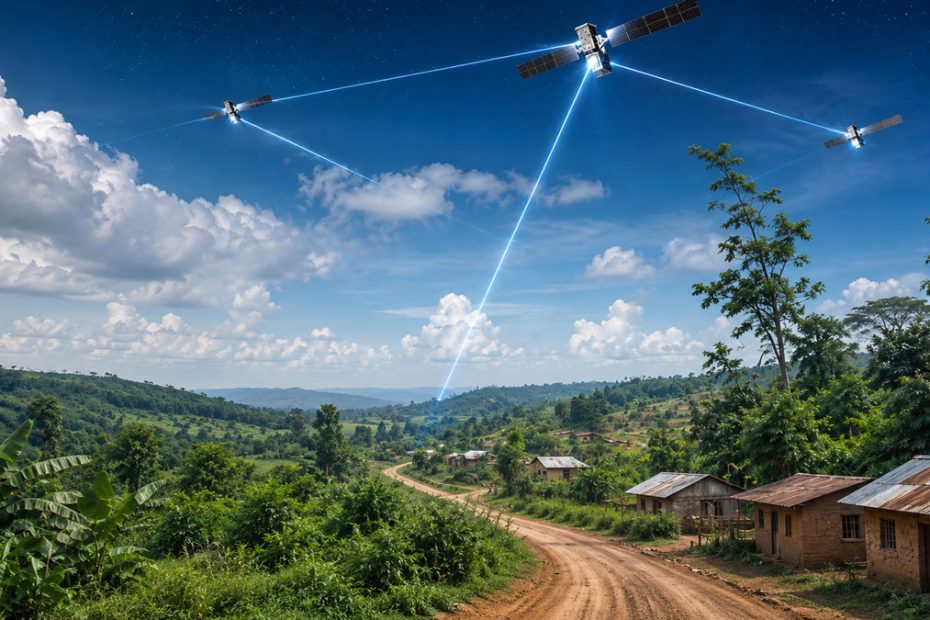
Unlike conventional Starlink broadband, the service does not require a Starlink terminal, external antenna or satellite phone. The smartphone itself connects to satellites carrying cellular communications payloads, effectively extending part of Airtel’s network into orbit.
At launch, however, this should not be confused with full satellite broadband on a phone. The initial service supports SMS and selected low-bandwidth applications, including WhatsApp messaging. Conventional high-speed mobile internet, video streaming and the full experience users expect from terrestrial 4G or 5G are not yet part of the commercial offer.
Starlink Mobile Goes Commercial
The DRC launch is the commercial result of a broader agreement between Airtel Africa and SpaceX announced in December 2025.
The companies subsequently tested Starlink Mobile messaging and data services in Kenya in March 2026, including locations outside Airtel’s terrestrial coverage. The DRC is the first Airtel Africa market where the technology has progressed from testing to a service available to customers.
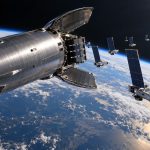
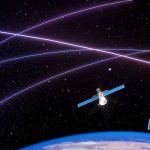
Starlink says its Direct to Cell satellites operate in a similar way to cellular towers in space and communicate with existing LTE phones rather than requiring specialized satellite handsets. SpaceX reported that the first-generation Direct to Cell constellation had grown to more than 650 launched satellites.
That technical architecture is important because it changes the economics of satellite connectivity.
Traditional satellite communications usually require users to acquire dedicated hardware. Direct-to-cell instead allows a terrestrial mobile operator to use satellite capacity as an extension of its own coverage footprint.
Compatible LTE Phones
The first phase is available on compatible LTE Android smartphones. Airtel says Apple device support is planned for a later stage.
Customers need an active Airtel DRC data bundle or data roaming enabled. Eligible customers can register through the MyAirtel app, with the service initially offered through a 30-day introductory free-access period. Airtel had not disclosed final standalone satellite pricing when the service launched.
The absence of specialized hardware is arguably the most significant part of the rollout.
For people traveling through remote areas, agricultural regions, mining districts or transport corridors, carrying a conventional smartphone is dramatically more practical than maintaining a separate satellite terminal.
DRC Coverage Challenge
The Democratic Republic of the Congo is also a logical market in which to test whether this model works commercially.
The country combines an enormous land area with forests, difficult terrain, widely dispersed settlements and regions where constructing and maintaining terrestrial telecommunications infrastructure can be expensive.
Direct-to-cell does not eliminate the need for cellular networks. Capacity, indoor reception, latency, available spectrum and service capabilities remain very different from a dense terrestrial network.
What it can potentially eliminate is the absolute coverage boundary.
Instead of a phone becoming completely disconnected after leaving the last cellular tower, satellite connectivity can provide a fallback communications layer.
For transport operators, mining companies, farmers, humanitarian organizations and people working far from major population centers, even a reliable messaging link could be much more valuable than its limited bandwidth suggests.
Satellite Coverage as a Network Layer
The more interesting technical development is therefore not that Starlink can send WhatsApp messages from space.
It is the emerging architecture behind the service.
Mobile networks have historically expanded geographically by installing additional terrestrial base stations. Satellite-to-phone systems introduce another option: operators can combine dense terrestrial infrastructure in populated areas with satellite capacity across territories where building towers provides weak economic returns.
That creates a hybrid network rather than a satellite replacement for cellular infrastructure.
Airtel still has strong incentives to continue expanding 4G and 5G networks. Its terrestrial infrastructure offers far greater capacity and is better suited to high-volume data traffic. Satellite connectivity can instead occupy the gaps between those networks.
Airtel Africa says it operated 40,378 network sites as of March 2026, up from 37,117 a year earlier, demonstrating that its satellite strategy is developing alongside continued terrestrial network investment rather than replacing it.
Why the DRC Launch Matters
The biggest question is no longer whether an ordinary smartphone can communicate directly with a low-Earth orbit satellite. That technical barrier has already been crossed.
The next challenge is whether satellite-to-phone connectivity can become economically invisible to the customer.
If users eventually move between towers and satellites without changing devices, installing antennas or consciously selecting a different communications service, satellite connectivity starts becoming part of the mobile network itself rather than a separate product category.
That is where this DRC launch becomes particularly important.
SMS and WhatsApp are modest capabilities compared with normal 4G broadband, but they provide Airtel and Starlink with something more valuable at this stage: a real commercial network in which they can measure device compatibility, satellite availability, customer behavior, regulatory requirements, congestion and pricing.
Future generations of satellites will need substantially more capacity before direct-to-cell can approach terrestrial broadband performance. But the commercial architecture is already taking shape.
In that sense, the DRC may ultimately be remembered less for launching another Starlink service and more for demonstrating one possible future of mobile coverage: terrestrial towers where they make economic sense, satellites wherever they do not.
Expansion Across 14 African Markets
Airtel intends to expand the Starlink Mobile model across the 14 African markets in which it operates, although each deployment depends on local regulatory and spectrum approvals.
Those markets include Nigeria, Kenya, Uganda, Tanzania, Zambia, Malawi, Rwanda, Niger, Chad, Gabon, Seychelles, Madagascar, the Republic of Congo and the Democratic Republic of the Congo.
If that expansion proceeds, the scale could be substantial.
Airtel Africa reported 183.5 million customers as of March 31, 2026, including 84.2 million data customers. Smartphone penetration across its customer base stood at 49.5%.
That means Starlink is not simply introducing another satellite communications product. Through partnerships with established operators such as Airtel, SpaceX is gaining a route into existing mobile subscriber bases without requiring every customer to become a conventional Starlink broadband subscriber.
About Airtel Africa
Airtel Africa is a telecommunications and mobile money group operating across 14 African markets.
As of March 31, 2026, the company reported:
- 183.5 million total customers.
- 84.2 million data customers.
- 54.1 million Airtel Money customers.
- 40,378 network sites.
- 49.5% smartphone penetration.
- 10.9 GB average monthly data usage per data customer.
Airtel Africa increased its customer base from 166.1 million in March 2025 to 183.5 million one year later.
About Starlink
Starlink is SpaceX’s low-Earth orbit satellite communications network, providing broadband and increasingly direct-to-cell connectivity.
Current company figures indicate:
- More than 12 million Starlink users globally.
- Service operating across more than 150 countries and markets.
- More than 650 Direct to Cell satellites launched.
- Direct to Cell designed to work with existing LTE phones without a dedicated satellite terminal.
Starlink added more than 4.6 million active customers during 2025 alone, according to SpaceX’s progress reporting.