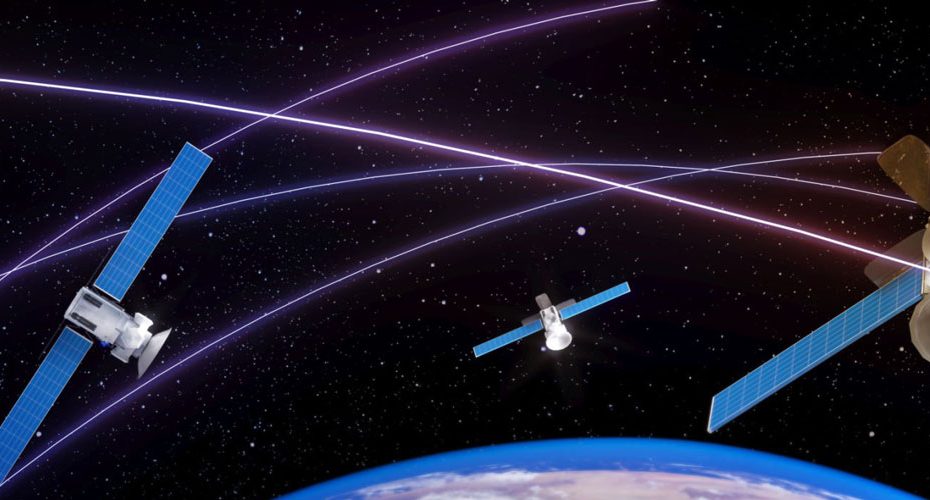
The satellite internet race is entering a new phase as SpaceX prepares to deploy its next generation Starlink V2 satellites, a constellation designed to dramatically increase network capacity and enable direct connectivity with ordinary smartphones.
According to the company, the new satellites could deliver up to 100 times the data density of the current Starlink V1 generation, potentially allowing mobile devices to connect directly to satellites in low Earth orbit while achieving speeds comparable to terrestrial 5G networks.
If successful, the technology could significantly reshape how mobile connectivity works, particularly in regions where traditional cellular infrastructure remains limited or economically difficult to deploy.
Starlink V2 Satellites Designed for Direct to Smartphone Connectivity
One of the most notable aspects of the upcoming V2 architecture is its ability to connect standard LTE smartphones directly to satellites without specialized hardware.
Instead of requiring a dedicated satellite terminal or external antenna, compatible phones would link directly to satellites operating in low Earth orbit at roughly 550 kilometers altitude, effectively treating each spacecraft as a cell tower in space.
This approach, known as Direct to Cell, has already begun limited deployment under the Starlink Mobile initiative. However, current services are restricted to low bandwidth applications such as basic messaging and emergency connectivity.
The V2 satellites are designed to change that by dramatically increasing available bandwidth and spectrum efficiency.
Early technical projections suggest that peak user speeds could reach approximately 150 Mbps, placing the performance within the range of many terrestrial LTE and early 5G networks.
Massive Constellation Expansion Planned with Up to 15,000 V2 Satellites
Achieving those speeds will depend heavily on scale.
SpaceX plans to launch up to 15,000 Starlink V2 satellites, significantly expanding the network’s capacity and coverage. The company has already begun deploying transitional V2 Mini satellites, which serve as intermediate versions while the full sized V2 platforms await higher capacity launch vehicles.
A larger constellation improves not only global coverage but also network density, allowing more users to share bandwidth without performance degradation.
The “100x data density” claim refers to the aggregate capacity of the constellation, meaning the network can support far more simultaneous users than earlier Starlink generations.
Initial testing of the expanded capabilities is expected around early 2027, depending on launch cadence and regulatory approvals.
Partnerships with Mobile Operators Will Enable Seamless Network Switching
Rather than replacing terrestrial networks, the Starlink mobile system is designed to integrate with existing cellular infrastructure.
SpaceX is already working with telecom operators such as T-Mobile in the United States, allowing smartphones to transition between ground based towers and satellites without interrupting service.
In practice, a phone may use conventional cellular towers in urban areas while automatically switching to satellite coverage in rural regions, oceans, mountains, or disaster zones.
This hybrid architecture could solve one of the long standing limitations of mobile networks: coverage gaps in remote or sparsely populated areas.
For industries such as agriculture, maritime transport, aviation, and emergency response, always available connectivity could become a major operational advantage.
What Direct to Satellite Smartphones Could Change for Global Connectivity
If the technology scales as planned, direct satellite connectivity could alter the economics of telecommunications.
Traditional cellular infrastructure requires thousands of ground towers, fiber backhaul, and spectrum licenses, making rural coverage costly. Satellite networks distribute coverage globally from orbit, meaning the marginal cost of reaching remote regions becomes dramatically lower.
Several practical impacts could follow:
- Reliable connectivity in rural and remote regions.
- Emergency communication when terrestrial networks fail.
- Global roaming without relying on national carrier agreements.
- Coverage for maritime, aviation, and wilderness environments.
However, real world performance will depend on constellation density, spectrum coordination with regulators, and integration with mobile operators.
Satellite networks also face physical limitations such as higher latency compared with terrestrial fiber, although low Earth orbit architectures have already reduced this gap significantly compared with older geostationary systems.
Starlink Continues Rapid Expansion of the Largest Satellite Network in History
Starlink is operated by SpaceX, the aerospace company founded by Elon Musk in 2002.
The network has grown rapidly to become the largest satellite constellation ever deployed, with more than 6,000 operational satellites currently in orbit and millions of subscribers worldwide.
Since the first operational launches in 2019, Starlink has expanded into over 70 countries, providing broadband internet to homes, businesses, maritime vessels, aircraft, and remote infrastructure.
SpaceX’s broader launch capabilities have also enabled the company to deploy satellites at a pace unmatched by competitors, largely using its Falcon 9 reusable rocket fleet, which now performs launches roughly every few days.
With the upcoming V2 constellation and direct to smartphone connectivity, Starlink is positioning itself not only as a satellite internet provider but as a potential global mobile network operating from orbit.