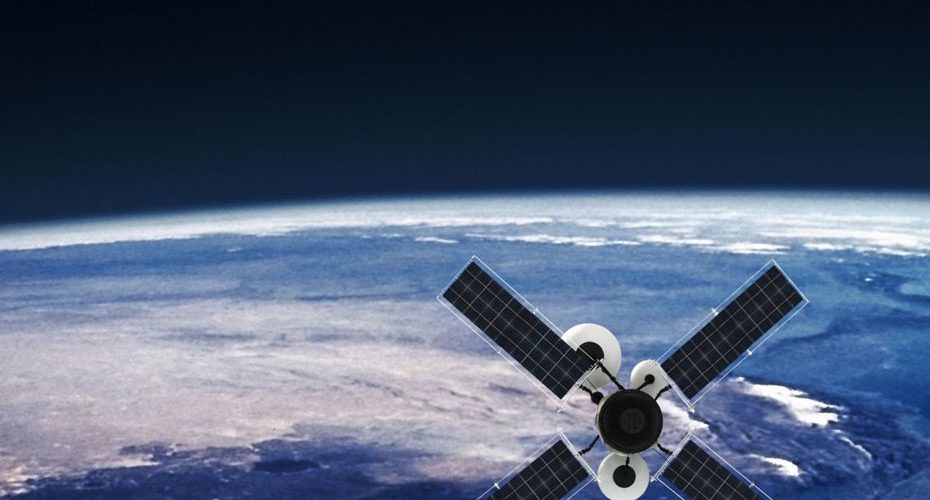
SpaceX has filed an application with the Federal Communications Commission seeking approval for a low Earth orbit satellite constellation designed to operate as an orbital data center. According to the filing submitted on January 30, the proposed system could include up to one million satellites, making it the largest satellite constellation ever formally proposed.
The satellites would operate at altitudes ranging from 500 to 2,000 kilometers, using a mix of 30 degree inclined orbits and sun synchronous orbits. SpaceX states that these orbital regimes are intended to maximize exposure to sunlight, enabling continuous solar power generation to support onboard computing workloads.
Orbital Data Centers Positioned as Alternative to Terrestrial AI Infrastructure
In its FCC submission, SpaceX argues that space based computing could address growing constraints facing terrestrial data centers, including rising electricity costs, grid limitations, and land use challenges. Satellites placed in higher sun synchronous orbits would remain in sunlight for more than 99 percent of each orbit, supporting continuous compute loads, while lower inclination satellites would be used to handle variable or peak demand.
The company positions the system as a long term platform for large scale artificial intelligence workloads, claiming that near constant solar energy and the absence of traditional cooling infrastructure could reduce operating costs compared with Earth based facilities. No specific performance figures such as processing capacity, power output, or satellite mass were disclosed in the filing.
Inter Satellite Optical Links and Ka Band Backup Communications
The proposed constellation would rely primarily on optical inter satellite links to route data between spacecraft and connect with the existing Starlink network for downlink to ground stations. SpaceX describes this architecture as central to enabling large scale distributed computing in orbit.
Ka band radio frequencies would be used only for telemetry, tracking, and command functions. SpaceX emphasized that Ka band operations would be conducted on a non interference and unprotected basis, and requested a waiver from standard FCC deployment milestones that typically require partial constellation deployment within six years and full deployment within nine years.
Regulatory Context and Comparison With Other Mega Constellation Proposals
If approved, the SpaceX proposal would exceed all previous constellation filings by a wide margin. China recently submitted plans to the International Telecommunication Union for satellite systems totaling nearly 200,000 satellites, while earlier filings by Rwanda in 2021 referenced systems exceeding 300,000 satellites, linked to concepts that were never deployed.
SpaceX did not provide a deployment timeline or cost estimate, nor did it specify how quickly satellites would be launched or activated.
Starship Launch Vehicle Central to Deployment Strategy
The filing highlights SpaceX’s reliance on its heavy lift launch system, Starship, to deploy both next generation Starlink satellites and the proposed orbital data center spacecraft. The company argues that Starship’s planned payload capacity is a key factor enabling large scale compute infrastructure in orbit.
SpaceX also suggests that orbital computing capacity could eventually exceed the total electricity consumption of the United States, without requiring major expansion of terrestrial power grids. No independent validation or numerical breakdown was included to support that claim.
Growing Focus on AI and Potential Corporate Restructuring
Interest in orbital data centers aligns with recent statements by SpaceX and its chief executive, Elon Musk, regarding the rapid growth in demand for AI compute. Media reports have linked this demand to SpaceX’s consideration of an initial public offering, as well as potential corporate combinations involving xAI or Tesla, both of which invest heavily in AI systems.
SpaceX Company Overview and Key Figures
Founded in 2002, SpaceX has launched more than 5,000 Starlink satellites into orbit as of early 2026 and conducts regular orbital and deep space missions for commercial, government, and scientific customers. The company operates Falcon 9 and Falcon Heavy launch vehicles and continues flight testing of Starship. SpaceX remains privately held, with reported annual launch cadence exceeding 90 orbital missions in recent years.