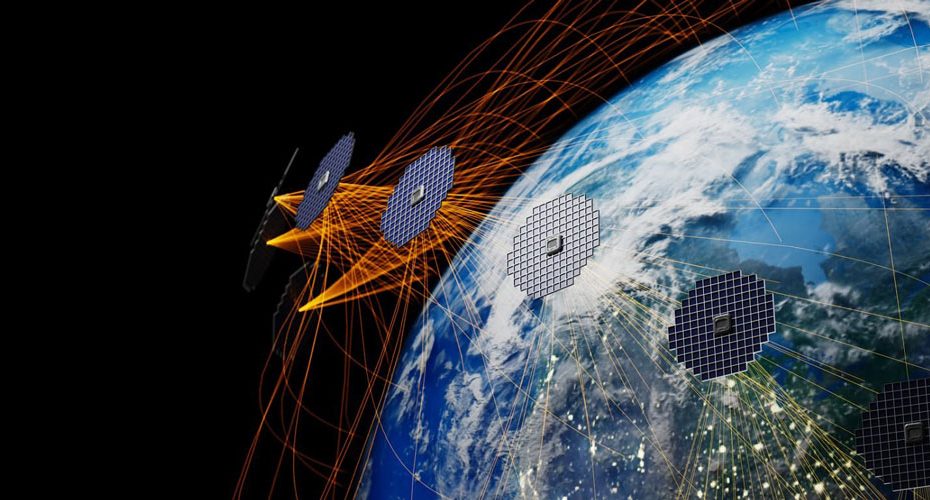
The low Earth orbit satellite internet market is entering a new phase. What began as a race to connect rural households is now evolving into a layered ecosystem serving consumers, governments, telecom operators, and hyperscale data users. The three most closely watched constellations illustrate this shift clearly: Starlink, Amazon Leo, and TeraWave.
Although all three rely on large constellations of satellites in low Earth orbit, their technical architectures, deployment timelines, and business strategies diverge sharply. Together, they reveal how satellite connectivity is fragmenting into distinct performance and pricing tiers rather than converging on a single universal model.
Constellation size and deployment maturity define market readiness
Starlink remains the most mature and operationally proven network. Developed by SpaceX, it began launches in 2019 and now operates more than 9,500 active satellites. Its rapid cadence is enabled by vertical integration, with Falcon 9 launches occurring weekly and iterative satellite upgrades rolled into each generation.
Amazon Leo, formerly known as Project Kuiper, reflects a more conservative engineering philosophy. Backed by Amazon, the constellation entered orbital deployment in 2025 and is still in its early scaling phase. Fewer than 250 satellites are currently active, with a licensed target of 3,236 spacecraft. Amazon relies on third party launch providers, including ULA and SpaceX, which slows rollout but allows greater focus on satellite reliability and payload refinement.
TeraWave is the newest and most ambitious conceptually. Announced by Blue Origin in January 2026, it plans a mixed low Earth orbit and medium Earth orbit architecture totaling 5,408 satellites. Deployment is scheduled to begin in 2027 and will likely depend on the New Glenn launch vehicle once operational. Unlike Starlink and Amazon Leo, TeraWave is being designed from the outset for high capacity enterprise traffic rather than mass consumer access.
Orbit design and network architecture reflect different performance goals
Starlink and Amazon Leo operate exclusively in low Earth orbit, typically between 500 and 600 kilometers. This enables low latency connections, often below 40 milliseconds, making them suitable for video conferencing, gaming, and real time cloud access.
TeraWave introduces a hybrid architecture that adds medium Earth orbit satellites. While this increases latency relative to pure LEO systems, it significantly expands coverage footprints and total throughput per satellite. This design choice aligns with Blue Origin’s stated goal of delivering carrier grade backhaul and data center connectivity rather than last mile consumer broadband.
From a technical standpoint, Starlink emphasizes dense satellite coverage and frequent handoffs, Amazon Leo prioritizes advanced phased array antennas and inter satellite links, while TeraWave is expected to lean heavily on optical crosslinks and high power Ka and possibly V band spectrum to move massive data volumes globally.
Throughput and speed targets separate consumer and enterprise networks
Starlink today delivers typical user speeds ranging from 50 to 250 megabits per second, with premium and enterprise tiers reaching higher burst rates. Amazon Leo is expected to offer similar performance initially, with stated targets approaching one gigabit per second for select customers once the constellation matures.
TeraWave operates in a different class entirely. Blue Origin has disclosed aggregate network capacity targets of up to 6 terabits per second per coverage region, designed to serve tens of thousands of enterprise, government, and infrastructure customers simultaneously. Rather than selling bandwidth to individual households, TeraWave will focus on service level agreements with guaranteed uptime, latency ceilings, and capacity commitments.
Target customers reveal strategic positioning
Starlink spans nearly every market segment. Its customer base includes rural households, maritime and aviation users, emergency services, and government agencies. This breadth has made it the de facto standard for rapid deployment connectivity, but it also forces trade offs between cost, capacity, and guaranteed performance.
Amazon Leo is positioning itself more narrowly at launch, focusing on telecom operators, government agencies, and enterprise clients before expanding to direct to consumer services. This staged approach mirrors Amazon Web Services’ early enterprise first strategy and suggests deeper integration with cloud and edge computing platforms over time.
TeraWave is explicitly enterprise only. Blue Origin has stated that individual consumers are not part of the plan. Instead, the network is designed for hyperscale data centers, sovereign governments, defense applications, and national telecom backhaul where reliability and throughput outweigh price sensitivity.
Regulatory scale and long term ambition
Starlink’s recent approval by the Federal Communications Commission to deploy vastly more satellites underscores its ambition to become a foundational layer of global data infrastructure. Amazon Leo remains bound by a more modest licensing framework, while TeraWave’s regulatory filings are still emerging and will be closely watched given its mixed orbit approach.
What is clear is that these systems are no longer direct substitutes for one another. Starlink is becoming a mass market utility, Amazon Leo a controlled enterprise and consumer hybrid, and TeraWave a high capacity backbone in space.
The satellite internet market is no longer one race
Rather than competing head to head on identical terms, Starlink, Amazon Leo, and TeraWave are defining separate lanes within the satellite connectivity ecosystem. Faster iteration, higher throughput, and specialized architectures are pushing the industry beyond basic broadband access toward a layered orbital infrastructure model.
As new generations of satellites come online, the real competition will not be who has the most satellites, but who delivers the right capacity, latency, and reliability to the customers who value it most.