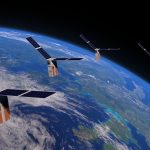
Pakistan’s Space and Upper Atmosphere Research Commission has officially introduced its domestically developed Pak SBAS satellite based augmentation receiver, marking a significant step in the country’s push toward sovereign navigation technology.
The system was publicly demonstrated during the Cholistan Rally 2026, a demanding multi day endurance race conducted in southern Punjab. Engineers deliberately selected this environment because desert conditions create some of the most challenging GNSS operating scenarios. Sandstorms, extreme temperatures above 45°C, and constantly shifting terrain often degrade standard satellite positioning.
According to field data from the event, Pak SBAS maintained continuous corrected signal tracking across GPS, GLONASS, Galileo, and BeiDou constellations. Rally teams equipped with the device consistently achieved higher waypoint accuracy and incurred fewer navigation penalties than competitors using standalone GNSS receivers.
The test effectively served as a stress validation phase prior to broader certification and commercial deployment.
Sub Meter Positioning Accuracy Places Pak SBAS Within Global SBAS Performance Class
Standalone GNSS receivers typically experience horizontal errors ranging from three to fifteen meters in open desert environments. These inaccuracies arise from atmospheric delays, multipath reflections, and limited satellite geometry.
Pak SBAS significantly improves positioning performance by applying real time correction data transmitted through geostationary satellites. During the rally trials, the system demonstrated:
- Sub meter horizontal accuracy in most operating segments.
- Approximately one meter vertical positioning precision.
- Stable signal integrity even during severe environmental interference.
This performance level places the system within the same general accuracy class as established augmentation frameworks such as WAAS in North America, EGNOS in Europe, and GAGAN in India.
Currently, Pak SBAS operates using a hybrid architecture that incorporates international correction streams while indigenous ionospheric models and timing algorithms are still under development. Full autonomy will require deployment of dedicated regional augmentation satellites.
High Value Use Cases Extend Across Agriculture, Disaster Response, and Transport
Beyond motorsport testing, the technology is already being evaluated in multiple civilian and strategic applications.
Disaster response represents one of the most critical use cases. In simulated emergency drills, Pak SBAS enabled command centers to track rescue convoys with meter level precision even when cellular infrastructure was unavailable. This capability is particularly important in Pakistan, where floods and earthquakes frequently disrupt communications in remote regions.
In the logistics sector, pilot deployments among long haul transport fleets have shown measurable operational improvements. Early trials indicate fuel savings of approximately four to seven percent due to optimized routing and reduced navigation errors in congested urban corridors.
Precision agriculture is another major target market. Ongoing trials in Punjab and Sindh are evaluating the system for variable rate fertilizer application, controlled irrigation, and yield mapping. These applications could significantly reduce input costs while improving farm productivity.
Aviation authorities are also assessing the technology for use in non precision approach procedures at remote airstrips, particularly in mountainous northern regions where ground based navigation infrastructure is limited.
Market Impact Signals Strategic Shift Toward National GNSS Sovereignty
From a market perspective, Pak SBAS represents more than a single hardware product. It signals Pakistan’s strategic move toward navigation independence, an increasingly important objective for many countries amid growing reliance on high precision positioning.
Globally, only a limited number of nations operate domestic SBAS infrastructure or produce augmentation grade receivers. By entering this segment, Pakistan positions itself to reduce dependence on imported high end GNSS equipment while building localized solutions tailored to regional ionospheric conditions.
If Pakistan deploys dedicated geostationary augmentation payloads in the future, Pak SBAS could evolve into a full regional augmentation system covering South Asia. This would potentially open export opportunities in neighboring markets lacking high precision correction infrastructure.
Industry analysts suggest that over the next decade, demand for augmentation grade positioning will grow rapidly across sectors including autonomous vehicles, smart infrastructure, precision agriculture, and defense applications. Indigenous SBAS solutions are expected to play an increasingly important role in national technology ecosystems.
Production Timeline and Commercial Rollout Strategy
SUPARCO officials confirmed that production scaling and certification processes are already underway. Initial units are expected to be delivered to government agencies and selected private sector partners before the end of 2026.
Training programs for end users will accompany the rollout, focusing on sectors such as public safety, agriculture, surveying, and transport logistics.
The phased commercialization strategy suggests that Pakistan intends to prioritize domestic deployment before exploring broader regional expansion.
About SUPARCO
The Space and Upper Atmosphere Research Commission is Pakistan’s national space agency, established in 1961. It oversees the country’s satellite programs, space research initiatives, and national navigation technologies.
SUPARCO has launched multiple Earth observation satellites in recent years, including the EO 1 and EO 2 missions, and operates a growing portfolio of geospatial and remote sensing programs. The agency plays a central role in Pakistan’s long term space strategy, which includes plans for satellite navigation infrastructure, communications satellites, and future human spaceflight collaboration initiatives.