The evolution of mobile networks started with 3G connecting people to people, then moved to 4G linking people with information. Now 5G takes a different path — it’s built from the ground up to connect everything. Billions of connected devices need communication systems that can juggle speed, latency, and cost without dropping the ball. And here’s where it gets interesting for positioning: this same connectivity infrastructure does more than just move data around.
Positioning used to be an afterthought in radio networks, something tacked on later. With 5G, that script gets flipped. The system treats positioning as a fundamental component rather than an extra feature. What this means in practice is that location-based services can now hit accuracy targets anywhere from a few meters down to sub-meter range, especially in places where GNSS traditionally struggles.
5G Positioning Technology
Several technologies come together in 5G networks to push positioning accuracy beyond what earlier mobile generations could manage. Wide bandwidth plays a key role here — it gives you better time resolution for calculating positions. The new millimeter-wave frequency bands support this wider bandwidth, which in turn helps nail down timing measurements more precisely.
Then there’s the massive antenna arrays. These enable base stations to figure out Direction of Arrival (DoA) with real accuracy. Combine that with Time of Arrival (ToA) measurements, and the network can pinpoint device locations when there’s a clear line of sight. The result? Meter or sub-meter accuracy levels that actually work for applications where precise positioning matters.
Urban environments are where things get tricky for GNSS. Buildings don’t just block satellite signals — they bounce them around, creating multipath interference. Dense city infrastructure cuts down on how many satellites your receiver can even see. When you’re stuck in these conditions, GNSS receivers can’t maintain the signal quality they need. But 5G networks operate in these exact same environments without breaking a sweat, delivering positioning data right where GNSS systems hit a wall.
Hybrid GNSS/5G Systems
When you put GNSS and 5G together, you get positioning systems that leverage what each technology does best. GNSS delivers global coverage and can hit centimeter-level accuracy in open areas — that’s where RTK positioning shines. 5G picks up the slack in urban canyons, indoor spaces, and anywhere else satellite signals can’t reach.
These hybrid systems are shaping up to be the backbone of location engines for LBS and IoT applications. They’re smart enough to switch between GNSS and 5G depending on what signals are actually available and what the environment looks like. GNSS signal degrading? 5G keeps positioning alive. Both signals available? The system can merge measurements to boost both accuracy and reliability.
The 5G piece solves some problems that GNSS-only setups just can’t handle:
- Clear sky visibility is non-negotiable for GNSS, and cities don’t play nice with that requirement.
- Buildings create dead zones where positioning simply drops out.
- Indoor positioning with GNSS? Not happening.
- Dense urban areas turn multipath errors into a real headache.
5G positioning covers these gaps using terrestrial infrastructure that doesn’t care about satellite line-of-sight. The technology pushes positioning data through cellular signals that can penetrate buildings and work in environments GNSS can’t touch.
Applications in Transportation and Automation
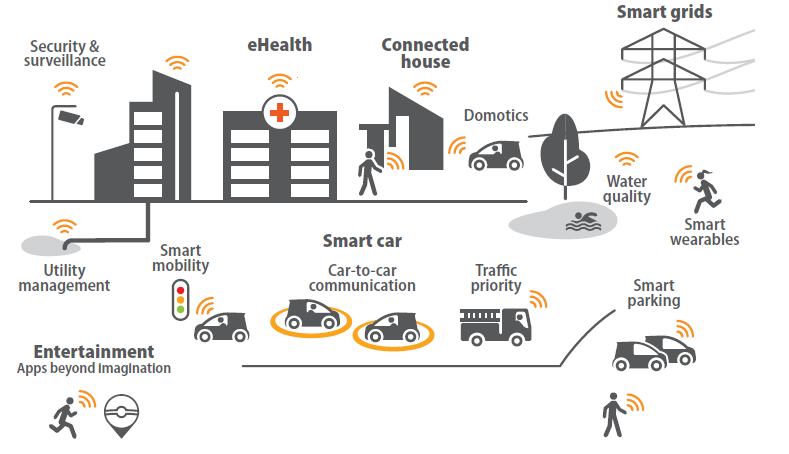
Transportation systems need both connectivity and positioning when automation enters the picture. Mission Critical Services in 5G are designed for applications where high reliability, ultra-low latency, and tight security aren’t optional. These services make Vehicle-to-Vehicle (V2V) and Vehicle-to-Infrastructure (V2I) communications possible—the kind that need real-time safety systems to function.
Driverless cars and Intelligent Transport Systems lean heavily on the accurate positioning that hybrid GNSS/5G delivers. Driver-assisted vehicles have to exchange data with nearby infrastructure in real time. Get the positioning wrong here, and you’re looking at potential safety failures.
The automotive sector is pushing hard toward more automation and autonomy. This shift demands connectivity across ports, airports, railways—basically anywhere logistics and digitalization meet.
What that looks like in practice:
- Vehicles and infrastructure trading large files and real-time data back and forth
- Information flowing across entire transportation networks without lag
- Data from different domains (transportation, public administration, emergency services, weather systems) getting synchronized
- Connected devices operating through MIoT protocols at scale
5G’s MIoT capability handles the sheer number of connected devices that automated transportation needs. It operates across both licensed and unlicensed spectrum while keeping power requirements low. Lower costs for MIoT deployments, deeper area coverage—these characteristics support positioning for millions of devices spread across transportation networks.
Cooperative positioning becomes feasible when vehicles, infrastructure, and mobile devices start sharing location data through 5G. This collective approach pushes positioning accuracy beyond what any single device could achieve with just GNSS. But here’s the catch: all that positioning data needs accurate synchronization to a common time source. That’s where 5G’s timing infrastructure comes in.
Technical Implementation
Several technical mechanisms make 5G positioning work as a complement to GNSS. The networks run enhanced time synchronization protocols that can hit nanosecond-level accuracy. Base stations with precise timing references essentially create a grid of known positions that devices can use for trilateration calculations.
Millimeter-wave frequencies open up bandwidth allocations in the hundreds of megahertz. That kind of bandwidth translates directly to timing resolution in the nanosecond range, which corresponds to positioning accuracy under one meter. Higher carrier frequencies bring another benefit — they allow for smaller antenna elements, making massive MIMO arrays practical for DoA estimation.
Network densification in 5G means more base stations packed into urban areas. More base stations equal more reference points for position calculations. The denser infrastructure also improves the geometry for trilateration, which helps counter the dilution of precision that typically plagues GNSS in urban canyons.
5G fills GNSS gaps in challenging environments, and together they create seamless, high-accuracy positioning as a core foundation for autonomous systems and transportation.