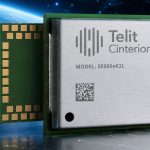
Telit Cinterion is moving deeper into the high precision IoT positioning market through a new integration partnership with Swift Navigation that combines dual frequency GNSS hardware, cellular connectivity, and cloud delivered correction services into a single commercial offering.
The new package brings Swift’s Skylark Dx correction service into Telit Cinterion’s IoT ecosystem, allowing device manufacturers to deploy sub meter positioning without building or subscribing to traditional RTK infrastructure.
From an industry perspective, this is an important shift because the GNSS market is gradually moving away from standalone receiver hardware toward fully integrated positioning ecosystems where connectivity, correction delivery, and cloud services are bundled together.
Bundled GNSS Architecture
The core of the new solution combines Telit Cinterion dual frequency L1 and L5 GNSS modules with the company’s NExT cellular connectivity platform and Swift Navigation’s Skylark Dx differential correction service.
Technically, Skylark Dx distributes DGNSS corrections using standard RTCM streams delivered over IP via NTRIP. The corrections are transmitted directly to compatible receivers through the cellular network, eliminating the need for local base stations or customer managed RTK infrastructure.
That architecture is particularly relevant for IoT deployments because many applications do not actually require full centimeter level RTK accuracy. Asset tracking, fleet management, robotics, autonomous mobile systems, drones, micromobility platforms, and industrial monitoring often benefit significantly from sub meter accuracy while avoiding the complexity, power consumption, and operational overhead associated with RTK deployments.
The use of dual frequency L1 and L5 GNSS is also notable. Compared with older single frequency receivers, dual frequency positioning substantially improves multipath mitigation and atmospheric error handling, especially in urban environments where reflections from buildings and infrastructure can degrade standard GNSS performance.
In practical terms, this allows IoT developers to achieve more stable positioning performance without redesigning their entire device architecture around precision agriculture style RTK workflows.
Cellular Connectivity Becomes Part Of The Positioning Stack
One of the most interesting aspects of this announcement is how tightly the correction service is tied to cellular delivery.
Historically, GNSS modules, SIM connectivity, and correction services were often sourced from completely different vendors. That created integration complexity for OEMs because positioning performance depended on multiple suppliers, multiple contracts, and multiple support channels.
Telit Cinterion is clearly trying to simplify that model by positioning connectivity itself as part of the navigation system.
This matters because correction reliability increasingly depends on network reliability. If the cellular link drops, correction delivery stops. In modern IoT positioning systems, the modem is no longer just a data transport component. It effectively becomes part of the navigation architecture itself.
For battery powered IoT devices, the low bandwidth requirements of DGNSS correction streams are also important. RTK services can introduce heavier data usage and more aggressive connectivity demands, while sub meter DGNSS often fits better within the power and bandwidth constraints of field deployed IoT hardware.
A Middle Ground Between Standard GNSS And RTK
The positioning market has gradually developed a large gap between consumer grade GNSS and full RTK precision systems.
Standard GNSS is often insufficient for advanced automation or high value tracking applications because accuracy can drift several meters depending on satellite geometry and environmental conditions.
RTK solves that problem but introduces additional operational layers including correction subscriptions, base station infrastructure, radio links, or high availability network services.
Swift’s Skylark Dx is clearly targeting the middle layer of the market where customers want better than standard GNSS accuracy without adopting full RTK operational complexity.
That positioning strategy makes sense commercially because many IoT fleets simply do not justify centimeter level positioning costs. For example, logistics tracking, container monitoring, shared mobility fleets, or industrial robotics may gain significant value from sub meter accuracy alone.
Telit Cinterion also confirmed that compatible modules can later migrate toward Skylark Nx RTK services if higher precision becomes necessary. That creates a relatively smooth upgrade path for OEMs developing scalable product platforms.
Coverage Limitations Still Matter
Despite the advantages, the system still depends heavily on correction coverage and mobile network availability.
According to the companies, Skylark Dx currently supports deployments across Europe, North America, Japan, South Korea, and Taiwan. Outside those regions, developers would still need alternative correction architectures or regional service providers.
That operational detail is important because GNSS correction availability is often overlooked during early product design phases. High precision positioning today depends not only on satellite visibility but also on communications infrastructure, correction availability, roaming agreements, and cloud service uptime.
For global IoT deployments, those dependencies increasingly become as important as the GNSS chipset itself.
Industry Trend Toward Integrated Positioning Services
The broader significance of this partnership is that it reflects where the GNSS and IoT industries are heading.
Hardware alone is becoming less differentiated. The real value increasingly comes from integrated ecosystems combining receivers, correction delivery, cloud management, connectivity, and lifecycle support.
In many ways, precise positioning is evolving into a subscription driven service layer rather than a standalone hardware capability.
For IoT device manufacturers, that could simplify deployment and reduce integration friction. For the GNSS industry itself, it signals continued consolidation between connectivity providers, cloud correction services, and positioning hardware vendors.
About Telit Cinterion
Telit Cinterion is one of the largest global IoT connectivity and module suppliers, formed through the merger of Telit and Thales IoT connectivity assets. The company provides cellular modules, GNSS solutions, IoT connectivity services, eSIM technologies, and industrial communication platforms for sectors including automotive, industrial automation, logistics, healthcare, energy, and smart infrastructure. Its technologies support millions of connected devices worldwide across LTE, 5G, LPWAN, and satellite enabled IoT deployments.