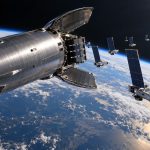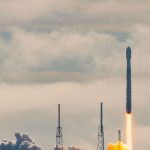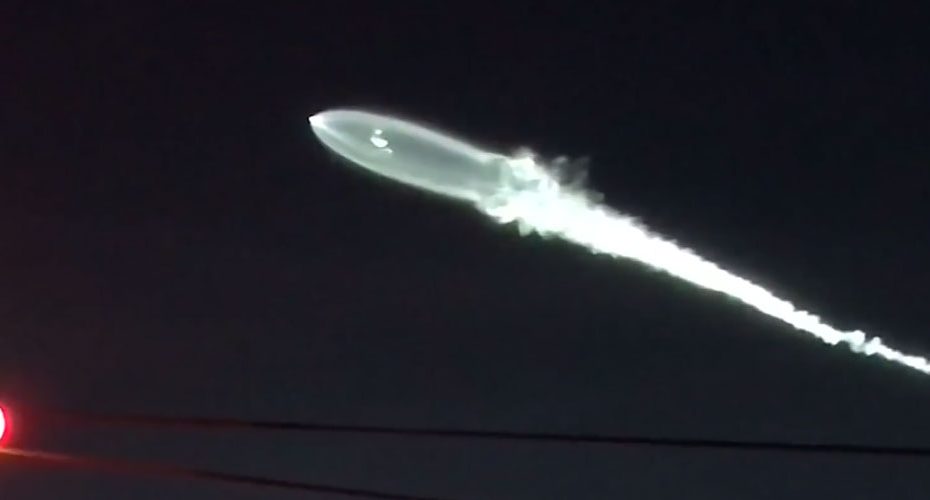
SpaceX continues to push its launch cadence with another Starlink mission from California, sending 25 satellites into a near polar orbit from Vandenberg Space Force Base. The Falcon 9 lifted off from Space Launch Complex 4 East at 9:29 p.m. local time, targeting an orbit of approximately 258 by 246 kilometers with a 97 degree inclination.
This trajectory is not случайний. High inclination orbits are critical for extending broadband coverage into higher latitudes where traditional geostationary solutions struggle with latency and signal angle. From a network architecture standpoint, these launches are less about raw satellite count and more about filling coverage gaps and improving consistency in underserved regions.
Booster reuse reaches new milestone with 21st flight and successful droneship landing
The first stage booster, identified as B1082, completed its 21st flight and landing cycle. It touched down on the autonomous droneship “Of Course I Still Love You” in the Pacific Ocean roughly eight minutes after liftoff.
At this point, reuse is no longer a technological demonstration. It is an operational backbone. A booster flying over twenty times indicates that refurbishment cycles, structural margins, and engine reliability have reached a level where launch vehicles function more like fleet assets than single use hardware. This directly translates into cost compression and scheduling flexibility.
Dual coast operations highlight SpaceX’s high frequency launch model
This mission marked the 46th Falcon 9 launch of 2026, reinforcing a launch tempo that is fundamentally reshaping the orbital services market. Notably, SpaceX conducted another Starlink launch from Florida just hours earlier, demonstrating synchronized operations across both U.S. coasts.
This kind of cadence would have been considered unrealistic a decade ago. Today, it reflects a system built around standardization. Identical rockets, repeatable mission profiles, and streamlined ground operations allow SpaceX to scale launch frequency without introducing proportional complexity.
From an industry perspective, this creates pressure on traditional launch providers whose business models still rely on lower frequency, higher margin missions.
Starlink constellation expansion focuses on capacity and redundancy rather than coverage alone
The 25 satellites deployed in this mission are part of the Starlink V2 Mini generation, designed to enhance throughput and network efficiency. While the constellation already numbers in the thousands, each additional batch serves multiple roles:
- Increasing bandwidth in high demand regions.
- Improving redundancy and network resilience.
- Reducing latency through denser orbital layering.
Satellites typically operate at around 550 kilometers altitude, balancing coverage footprint and latency performance. The architecture is evolving from simple coverage expansion to a more complex, capacity driven network similar to terrestrial telecom infrastructure.
What this means for the broader satellite and connectivity market
The key shift is not just scale. It is operational consistency. SpaceX is effectively turning orbital deployment into a continuous process rather than a series of isolated missions.
For end users, this results in:
- More stable connection quality.
- Higher available bandwidth.
- Faster rollout of service in remote regions.
For competitors, it raises the barrier to entry significantly. Matching launch cadence, satellite production, and network integration simultaneously is a nontrivial challenge.
About SpaceX
SpaceX, founded in 2002, has become the dominant player in commercial launch services. The company has conducted hundreds of Falcon 9 missions and is currently the only provider regularly reusing orbital class boosters at scale.
Key figures:
- Over 300 Falcon 9 launches completed historically.
- More than 5,000 Starlink satellites deployed.
- Industry leading launch cadence with dozens of missions annually.
- Reusability milestones exceeding 20 flights per booster.
This combination of vertical integration, reusable hardware, and high frequency operations has allowed SpaceX to reduce launch costs while simultaneously expanding its own satellite network.