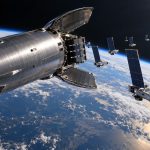
The U.S. Federal Communications Commission has approved SpaceX to deploy 7,500 additional second-generation Starlink satellites, bringing the authorized Gen2 total to 15,000 spacecraft worldwide.
This decision marks a major step in SpaceX’s plan to scale its next-generation low Earth orbit network, designed to deliver faster broadband, lower latency, and new mobile connectivity services.
FCC Approval Allows 7,500 More Gen2 Starlink Satellites
The FCC confirmed that SpaceX can proceed with launching another 7,500 Gen2 Starlink satellites. However, the company had originally asked for permission to deploy an extra 15,000 spacecraft.
Regulators chose to delay most of that request, formally deferring authorization for the remaining 14,988 proposed satellites while they continue to study technical, safety, and interference concerns related to such a massive constellation.
Direct-to-Cell Connectivity Gets Green Light on Five Frequencies
Beyond simply adding more satellites, the FCC decision enables Starlink Gen2 spacecraft to operate across five frequency bands for direct-to-cell services outside the United States.
This means future Starlink satellites will be able to connect directly with standard mobile phones, extending coverage into remote areas where traditional cellular infrastructure does not exist. In the U.S., the same system will support supplemental coverage, filling gaps in rural and hard-to-reach regions.
SpaceX Faces Strict Launch Deadlines
The FCC tied its approval to clear deployment milestones.
SpaceX must:
- Launch 50 percent of the approved satellites by December 1, 2028.
- Deploy the remaining 50 percent by December 2031.
If SpaceX fails to meet these deadlines, it risks losing authorization for part of the constellation.
FCC Delays Most of SpaceX’s Larger Expansion Plan
While approving 7,500 satellites now, the FCC declined to immediately approve SpaceX’s full request. The agency said it will “defer authorization” of nearly 15,000 additional Gen2 satellites until further technical and regulatory reviews are completed.
This cautious approach reflects growing concern over orbital congestion, spectrum sharing, and the long-term sustainability of mega-constellations in low Earth orbit.
About SpaceX and the Starlink Brand
SpaceX is a U.S. aerospace company founded by Elon Musk, known for reusable rockets like Falcon 9 and Starship. Its Starlink project is the world’s largest satellite internet constellation, already operating thousands of satellites in low Earth orbit to provide broadband service in more than 70 countries. Starlink is also expanding into mobility, aviation, maritime, and direct-to-cell connectivity markets.