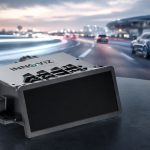
Automotive technology company ECARX has announced its formal entry into the rapidly growing LiDAR sector through a new partnership with Taiwanese manufacturing specialist TPK Holding. The two companies plan to jointly develop the ORCA LiDAR platform, a new sensing system designed for advanced driver assistance systems and future autonomous driving applications.
The agreement marks a significant strategic expansion for ECARX, which until now has primarily focused on intelligent cockpit systems, vehicle computing platforms, connectivity solutions, and automotive software. By moving into LiDAR development, the company is attempting to strengthen its position as a full stack supplier of automotive intelligence technologies.
According to both companies, the ORCA platform will be engineered to meet global safety, regulatory, and automotive quality requirements while supporting applications ranging from premium passenger vehicles to robotaxi fleets.
Mass Production Planned For 2028
The companies confirmed that mass production is currently scheduled for 2028, with manufacturing expected to take place at TPK’s production facility in Thailand.
While the announcement provides a roadmap for commercialization, it notably lacks detailed technical specifications. No information has yet been released regarding detection range, field of view, point cloud density, laser architecture, wavelength, resolution, or semiconductor technology.
That absence is not unusual at this stage. Most LiDAR developers initially focus on announcing partnerships and commercial strategy before revealing performance benchmarks closer to production readiness.
Software Meets Optical Manufacturing
The partnership combines two very different areas of expertise.
ECARX will be responsible for system integration, sensor fusion, software coordination, and global commercialization efforts. The company already maintains relationships with major vehicle manufacturers and intelligent mobility operators, giving it an established route to market.
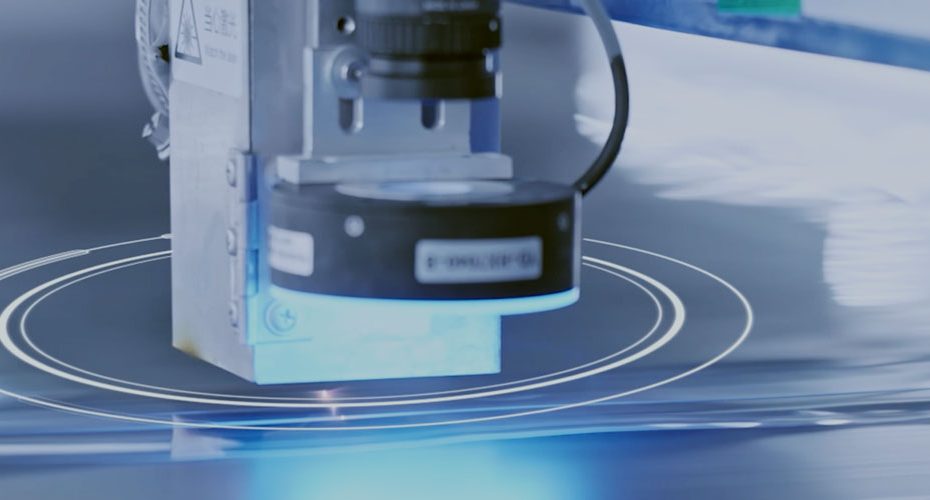
TPK will contribute optical engineering, precision manufacturing, and large scale production capabilities. The company has decades of experience producing high precision components for global electronics brands, making it a logical manufacturing partner for a sensor platform that depends heavily on optical performance and production consistency.
The companies claim the ORCA platform will focus on low latency perception and tight hardware software integration, two areas that have become increasingly important as autonomous driving systems grow more sophisticated.
Why This Partnership Matters
From an industry perspective, the most interesting aspect of this announcement is not the hardware itself but the broader strategy behind it.
The autonomous driving industry has gradually shifted away from relying entirely on third party sensor suppliers. Companies increasingly want tighter control over cameras, radar, LiDAR, software, AI processing, and vehicle computing platforms. Vertical integration allows developers to optimize performance while reducing costs and dependency on external vendors.
ECARX appears to be following that same path.
By developing its own LiDAR platform, the company gains direct influence over perception technology rather than treating sensors as off the shelf components. If successful, this approach could help ECARX offer more tightly integrated autonomous driving solutions to automakers.
The timing is also noteworthy. After a period when some manufacturers questioned whether LiDAR was necessary, the technology has regained momentum. Robotaxi operators, premium automotive brands, and autonomous mobility developers continue investing heavily in LiDAR as a key sensor for high level driving automation.
Competition Will Be Fierce
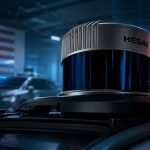
The challenge for ORCA is that the LiDAR market is already crowded with established players including Luminar Technologies, Hesai Technology, Innoviz Technologies, Ouster and several fast growing Chinese suppliers.
Success will depend on more than sensor performance alone. Pricing, manufacturing scale, reliability, software integration, and the ability to secure contracts with major automakers will ultimately determine whether ORCA becomes a meaningful competitor or simply another entrant in an increasingly competitive market.
My view is that ECARX’s biggest opportunity is not necessarily building the best LiDAR sensor on the market, but creating a tightly integrated ecosystem where LiDAR, vehicle computing, software, and AI perception work together as a single package. Automakers are increasingly looking for complete solutions rather than standalone components, and that may become ORCA’s strongest selling point.
About ECARX
ECARX was founded in 2017 by entrepreneur and technology executive Shen Ziyu.
Key facts:
- Founded: 2017.
- Headquarters: London, United Kingdom.
- Listed on Nasdaq under ticker ECX.
- Focuses on intelligent cockpits, vehicle computing, connectivity, software platforms, and smart mobility technologies.
- Technology deployed across multiple brands associated with the Geely automotive ecosystem.
- Serves automotive manufacturers in Asia, Europe, and other international markets.
About TPK Holding
TPK Holding is one of Taiwan’s leading precision electronics manufacturers with extensive experience in touch technologies and optical components.
Key facts:
- Founded: 2003.
- Headquarters: Taiwan.
- Listed on the Taiwan Stock Exchange under ticker TPK.
- Operates multiple manufacturing facilities across Asia.
- Specializes in touch solutions, optical engineering, precision manufacturing, and advanced electronics production.
- Supplies components for global consumer electronics, industrial, and technology sectors.
Outlook
The ORCA LiDAR platform remains years away from production, but the announcement signals a clear ambition from ECARX to become a more comprehensive autonomous driving technology supplier. If the company can successfully combine its software expertise with TPK’s manufacturing capabilities, ORCA could emerge as a serious contender in the next generation automotive sensing market when production begins in 2028.