Leica Geosystems has expanded the flexibility of its field positioning ecosystem with the release of Zeno Connect 4.3, allowing the Leica GS05 tilt compensating smart antenna to work directly with external data collection applications on both Android and Windows platforms.
The update significantly broadens how developers and field professionals can use Leica GNSS hardware. Instead of relying exclusively on proprietary surveying software, users can now integrate the GS05 receiver into their own custom mobile apps, GIS tools, and cloud based field workflows.
For industries that increasingly depend on tailored data collection environments such as construction, utilities, agriculture, asset inspection, and infrastructure mapping, this level of interoperability removes one of the key limitations of closed positioning systems.
Leica GS05 Smart Antenna Tilt Compensation Technology Expands App Integration Possibilities
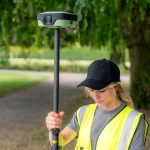
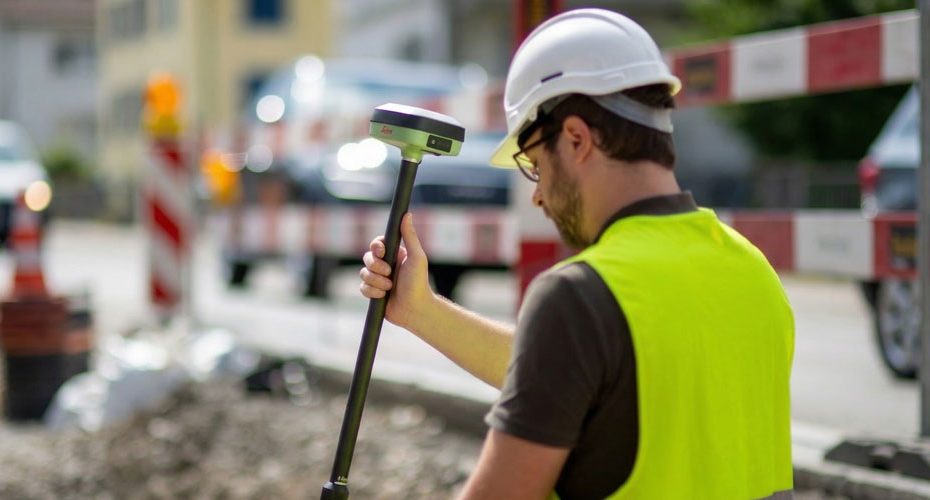
The Leica GS05 is part of Leica’s modern generation of compact GNSS smart antennas designed for professional field data capture. One of its defining capabilities is tilt compensated positioning, which allows accurate coordinate measurement even when the pole is not perfectly vertical.
Traditionally, survey grade GNSS measurements required the pole to remain upright. Tilt compensation eliminates that constraint by using internal sensors to continuously calculate the antenna orientation and correct the measured coordinates accordingly.
This capability offers several practical advantages in real world environments:
- Faster point capture in dense urban areas or near obstacles.
- Improved productivity for asset mapping crews.
- Reduced operator fatigue since strict pole leveling is no longer required.
- More reliable measurements when working around fences, walls, vegetation, or traffic.
By allowing the GS05 to feed its tilt corrected position directly into third party mobile applications, Zeno Connect 4.3 effectively transforms the receiver into a flexible positioning sensor that can support a wide range of custom field workflows.
Zeno Connect 4.3 Opens Leica GNSS Hardware to Custom Mobile and Web Based Workflows
The Zeno Connect platform functions as a software bridge between Leica GNSS receivers and external applications. With version 4.3, developers and field teams gain a simplified path to integrate Leica hardware into their own software environments.
According to Leica Geosystems, the updated platform enables:
- Direct GNSS data streaming to Android and Windows applications.
- Compatibility with native mobile apps and browser based field tools.
- Access to tilt compensated positioning data from the GS05 receiver.
- Simplified integration for organizations building their own GIS or asset management apps.
This is particularly relevant as many organizations now develop custom field data collection systems instead of relying exclusively on traditional surveying software packages.
Utility companies, environmental monitoring teams, construction inspectors, and municipal GIS departments often use specialized applications tailored to their workflows. Being able to integrate survey grade positioning directly into those tools removes an important layer of complexity.
From a technical perspective, this strategy aligns Leica with a broader trend in the geospatial industry toward open positioning ecosystems, where hardware serves as a high precision sensor within larger digital workflows.
Why Tilt Compensated GNSS Receivers Are Becoming Standard in Modern Field Surveying
Tilt compensation has rapidly evolved from a premium feature into a productivity requirement for many field operations.
Survey crews increasingly operate in environments where traditional pole leveling is difficult or inefficient. Urban infrastructure mapping, for example, often involves measuring points next to buildings, under trees, or behind barriers where holding a pole perfectly vertical is impractical.
Modern GNSS receivers like the GS05 address this challenge through integrated inertial measurement units that continuously calculate the antenna orientation. The receiver then adjusts the coordinate solution to reflect the true ground position.
The result is a noticeable improvement in field efficiency and data capture speed, especially when combined with real time correction services such as RTK or network RTK.
For organizations developing their own field applications, the ability to access these corrected coordinates directly inside custom software can dramatically streamline workflows.
About Leica Geosystems
Leica Geosystems, part of the Hexagon AB group, is one of the world’s most recognized manufacturers of professional surveying, mapping, and geospatial measurement technologies.
Founded more than 200 years ago, the company develops high precision instruments used across industries including construction, geodesy, infrastructure engineering, mining, utilities, and environmental monitoring.
Key facts about Leica Geosystems and Hexagon:
- Headquarters: Heerbrugg, Switzerland.
- Parent company: Hexagon AB, Sweden.
- Hexagon global workforce: over 24,000 employees
- Hexagon annual revenue: approximately €5 billion
- Leica Geosystems operates in 100+ countries through direct offices and distribution partners
The company’s product portfolio spans GNSS receivers, robotic total stations, laser scanners, machine control systems, and geospatial software platforms, positioning Leica as one of the central technology providers in the modern digital construction and surveying ecosystem.