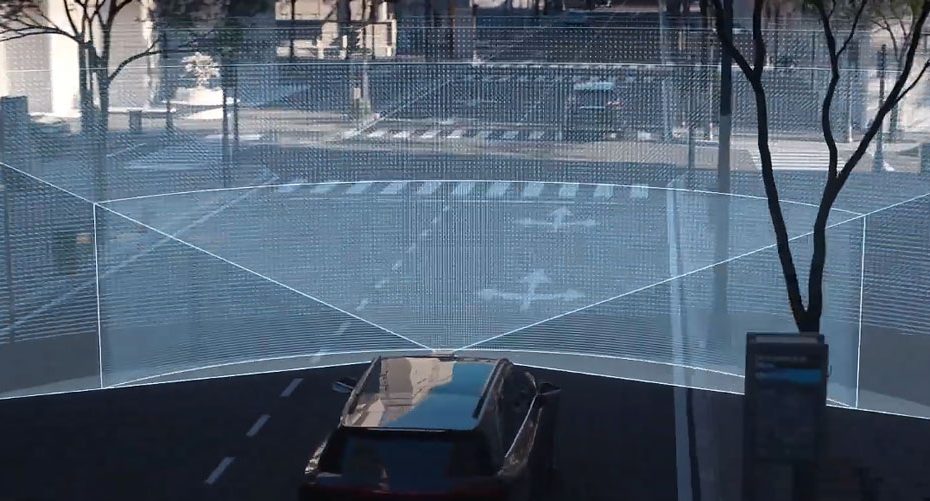
Chinese electric vehicle giant BYD has formally selected RoboSense as the exclusive LiDAR supplier for eleven newly introduced vehicles, marking one of the largest single LiDAR deployment programs currently underway in the global automotive industry.
The announcement was made during BYD’s technology event in Shenzhen, where the company also presented updates to its Blade Battery platform and introduced next generation megawatt flash charging technology.
The partnership places RoboSense digital LiDAR sensors across a broad portfolio of BYD vehicles spanning multiple brands and price segments, from mainstream passenger cars to premium performance and off road models.
The scale of the agreement highlights how quickly LiDAR technology is moving from niche autonomous prototypes toward mass market driver assistance systems.
RoboSense EM4 Digital LiDAR Platform Powers BYD Intelligent Driving Systems
The vehicles unveiled during the event include a wide range of models from BYD and its sub brands.
Among them are:
- BYD Song Ultra EV
- BYD Sealion 06 EV (2026)
- BYD Seal 07 EV (2026)
- BYD Seal 08
- BYD Da Tang
- Denza Z9 GT (2026)
- Yangwang U7 (2026)
- Yangwang U8 and U8L
- Fang Cheng Bao Ti7 EV flash charging edition
- Fang Cheng Bao Ti3 EV flash charging edition
Across all configurable versions of these vehicles, RoboSense LiDAR sensors are installed as the exclusive digital perception system.
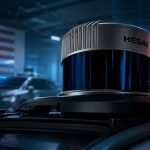
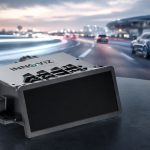
The hardware platform selected for the program is RoboSense’s EM4 digital LiDAR architecture, which entered mass production in mid-2025.
The EM4 platform is notable for being one of the first commercially scalable “thousand beam” LiDAR systems designed specifically for large scale automotive deployment.
Main architecture features:
- Proprietary SPAD SoC photon detection chip.
- Integrated VCSEL laser emitter arrays.
- Crosstalk elimination algorithms.
- All condition photoelectric signal processing
- Lossless onboard data compression.
These elements allow the system to operate with significantly improved environmental stability compared with earlier mechanical LiDAR designs.
EM4 LiDAR Performance Specs
One of the defining characteristics of the EM4 platform is its modular beam configuration.
Manufacturers can deploy LiDAR units configured with:
- 520 beams
- 720 beams
- 1,080 beams
- 2,160 beams
This allows automakers to tailor sensor resolution and cost depending on vehicle class and autonomous driving capability.
The 1,080 beam configuration currently represents the most advanced version used in passenger vehicles.
Published performance metrics include:
- Angular resolution: 0.050° × 0.025°
- Maximum detection range: up to 600 meters.
Object detection capabilities reported by RoboSense include:
- Tires detectable at 180 meters.
- Small obstacles at 250 meters.
- Traffic cones identifiable at 300 meters.
Testing of the lower cost 520 beam configuration demonstrated the ability to detect a 13 × 17 cm object at approximately 130 meters, indicating strong performance even in entry level implementations.
According to RoboSense, the EM4 platform can improve system response time by up to 70 percent compared with current mainstream automotive LiDAR systems, largely due to the digital architecture and onboard processing.
BYD Expands LiDAR Adoption to Entry Level Electric Vehicles
Perhaps the most strategically significant aspect of the partnership is BYD’s plan to extend LiDAR compatibility to lower priced vehicles.
Chinese regulatory filings indicate that LiDAR sensors may also become available in the BYD Seagull, currently the company’s most affordable EV.
The Seagull starts at roughly 56,800 yuan (around $8,200) in the Chinese market.
Introducing LiDAR capability in vehicles at this price point would represent a major shift in the automotive sensor market.
Historically, LiDAR systems have been limited to premium vehicles due to cost and complexity.
BYD’s strategy suggests that large scale production and simplified digital sensor architecture may finally allow advanced driver assistance features to reach mass market vehicles.
RoboSense has described this transition as the democratization of intelligent driving technology.
RoboSense Design Wins Reveal Major Chinese EV Manufacturer Customer
During an earnings call in 2025, RoboSense disclosed that it had secured LiDAR design wins across 32 models from a leading Chinese electric vehicle manufacturer, though the company did not publicly identify the customer at the time.
The latest announcement confirms that BYD is the OEM behind that program.
The EM4 platform has already entered large scale production and has been deployed in several vehicles including:
- IM Motors LS6
- IM Motors LS9
- Zeekr 9X
In addition to passenger vehicles, the platform has also been selected for upcoming robotaxi programs in both China and North America, indicating growing adoption in autonomous mobility fleets.
Evidence Points to RoboSense as LiDAR Supplier for Rivian R2 SUV
RoboSense’s growing global customer list may also include Rivian.
While Rivian previously confirmed that its upcoming R2 electric SUV would integrate LiDAR sensors, the company did not disclose the supplier.
However, multiple indicators suggest RoboSense is the partner.
The company previously referenced collaborations with:
- A North American emerging automaker.
- A global pure electric pickup brand.
- A joint venture with a European luxury automaker.
Industry reports increasingly point toward Rivian as the most likely match for those descriptions.
Rivian plans to begin R2 deliveries in the United States during the first half of 2026, with official pricing and trims expected to be announced on March 12.
RoboSense Financial Recovery Fueled by Rapid LiDAR Sales Growth
The BYD supply agreement comes at a critical moment for RoboSense as the company moves toward financial stabilization.
According to recent filings, the Hong Kong listed firm expects its 2025 net loss to narrow to approximately 180 million yuan ($24.7 million).
This represents a substantial improvement from 481.8 million yuan in losses recorded in 2024, a reduction of more than 62 percent.
The company also reported:
- First profitable quarter in Q4 2025.
- At least 60 million yuan quarterly profit.
- 303,000 robotics LiDAR units delivered in 2025.
That shipment volume represents an increase of more than 1,140 percent compared with the previous year, reflecting rapid expansion in automotive and robotics markets.
About RoboSense
Founded in 2014 and headquartered in Shenzhen, RoboSense has emerged as one of the fastest growing LiDAR developers in the automotive industry.
The company focuses on digital solid state LiDAR systems designed for:
- Advanced driver assistance systems.
- Autonomous driving platforms.
- Robotaxi fleets.
- Robotics and industrial automation.
RoboSense went public on the Hong Kong Stock Exchange in 2024, becoming one of the first LiDAR manufacturers to reach public markets during the sector’s rapid growth phase.
Its product portfolio now includes multiple LiDAR architectures supporting passenger vehicles, autonomous transport systems, and robotic perception platforms.
With partnerships now spanning Chinese EV leaders, emerging North American automakers, and autonomous mobility developers, RoboSense is positioning itself as a major supplier in the next generation automotive sensing ecosystem.