The US Space Force is facing renewed launch uncertainty at a time when modernizing the Global Positioning System has become strategically urgent. Following a second solid rocket booster anomaly on United Launch Alliance’s Vulcan rocket, officials expect the investigation to last several months. In the meantime, the military is reassessing how quickly it can deploy the next generation of GPS satellites designed to counter escalating interference and spoofing threats.
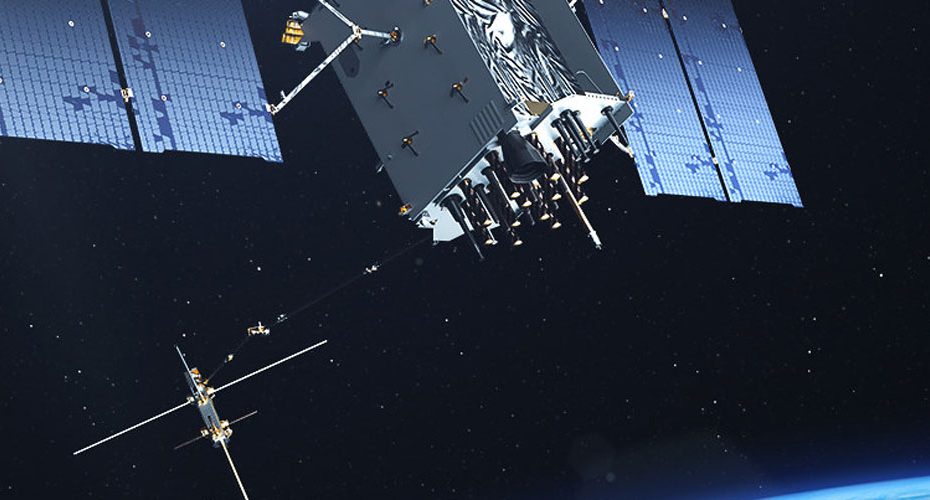
GPS remains one of the most operationally critical space systems ever built. With 31 operational satellites in medium Earth orbit at roughly 20,000 kilometers altitude, the constellation supports civilian navigation, aviation safety, financial timing networks, and military precision operations worldwide. At least 24 satellites are required for global coverage, but higher satellite counts improve geometry and positioning accuracy.
The modernization effort is not just about replenishment. It is about resilience.
Since the mid 2000s, newer satellites have introduced additional civilian signals and the encrypted M code military signal, engineered to resist jamming and spoofing. Today, 26 of the 31 operational satellites carry M code, while only 19 broadcast the higher power L5 civilian aviation signal. That leaves limited margin in a world where interference is increasing sharply, particularly around Russia, Ukraine, the Middle East, and the eastern Mediterranean.
Industry data shows spoofing incidents surged dramatically in 2024, and several high profile aviation disruptions have drawn international attention to the vulnerability of satellite navigation signals. From a defense perspective, M code enables secure access for US and allied forces while preserving the ability to deny service to adversaries during conflict. That capability is central to modern warfare doctrine.
Vulcan Solid Rocket Booster Anomalies Trigger Multi Month Investigation
The complication now lies with launch access.
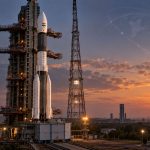
United Launch Alliance has flown Vulcan four times successfully to orbit, but two missions experienced serious anomalies involving strap on solid rocket boosters supplied by Northrop Grumman.
The latest incident occurred during the February 12, 2026 mission from Cape Canaveral Space Force Station. One booster exhibited a nozzle related failure shortly after liftoff. Although the rocket compensated and delivered its payloads to the correct orbit, the recurrence of a similar issue first seen in 2024 has raised red flags within Space Systems Command.
Investigators previously traced the earlier failure to a manufacturing defect in a carbon composite insulator inside the nozzle assembly. The repetition suggests either incomplete corrective action or a separate systemic problem. Space Force officials have indicated the investigation will likely take multiple months to fully identify root cause and corrective measures.
Until that process is complete, national security payloads will not fly on Vulcan.
From a programmatic standpoint, this pause creates immediate tension. The next Vulcan mission was expected to carry another new GPS satellite. Additionally, one of the Space Force’s highest value geosynchronous missile warning satellites, estimated at more than 4 billion dollars, is assigned to Vulcan later this year.
Falcon 9 Emerges as the Only Near Term Alternative
In practical terms, the only near term alternative is SpaceX and its Falcon 9 rocket.
Over the past year, the Space Force has already shifted three GPS III satellites from Vulcan to Falcon 9 due to earlier Vulcan development delays. Because GPS spacecraft are now qualified on multiple launch providers, the transition is technically straightforward for this satellite family. That flexibility does not necessarily extend to all mission classes, particularly large geosynchronous systems optimized around Vulcan’s performance envelope.
The GPS III satellites themselves are built by Lockheed Martin and represent the most capable generation in the constellation. They offer improved accuracy, stronger anti jam capability, and extended design life compared to legacy satellites launched in the late 1990s and early 2000s.
Professional Assessment
From a technical oversight perspective, this situation reinforces two structural realities in national security space.
First, propulsion supply chains remain a critical vulnerability. Solid rocket motors appear simple compared to cryogenic engines, but composite nozzle materials and high temperature insulation systems are extremely sensitive to manufacturing precision. Recurring anomalies in this subsystem suggest either quality assurance gaps or insufficient statistical process control.
Second, launch provider redundancy is no longer optional. The Space Force’s earlier decision to certify GPS satellites on multiple rockets now looks strategically prudent. In a threat environment defined by electronic warfare and great power competition, schedule assurance is as important as raw performance.
However, overreliance on a single commercial provider such as Falcon 9 also introduces concentration risk. A balanced industrial base remains essential for long term resilience.
About United Launch Alliance
United Launch Alliance was formed in 2006 as a joint venture between Boeing and Lockheed Martin. The company has conducted more than 150 launches with a historically high mission success rate, primarily using its Atlas V and Delta IV rockets. Vulcan is ULA’s next generation launch vehicle, powered by two BE 4 methane engines and up to six solid rocket boosters, designed to replace both Atlas V and Delta IV while competing in the commercial and national security markets.
Vulcan is certified for US national security missions and is central to ULA’s future backlog. Resolving the booster anomaly quickly and decisively will be critical not only for GPS modernization but also for maintaining confidence in the broader US launch ecosystem.