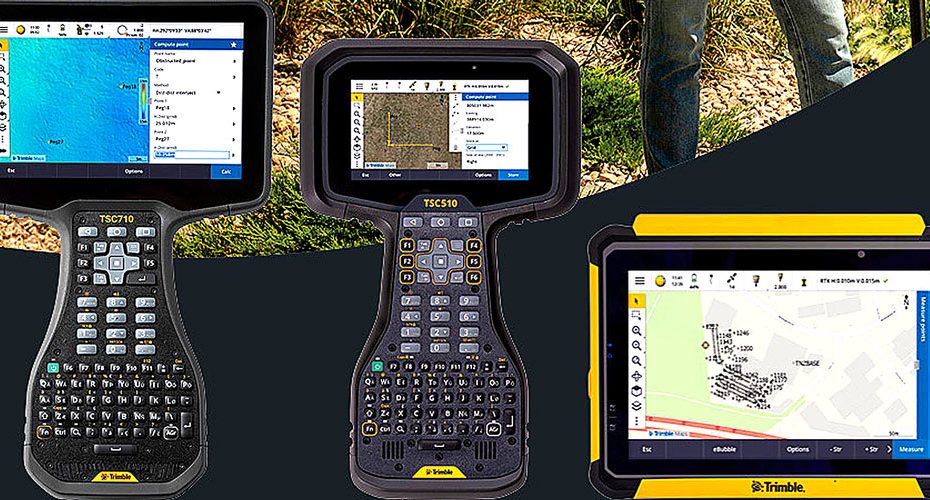
Trimble Inc. has announced a new connectivity solution for its North American users, introducing a multi network SIM and data plan developed in partnership with DAC Wireless. The system is designed to automatically switch between available mobile carriers, ensuring continuous connectivity in environments where signal reliability directly impacts productivity.
For professionals working with GNSS receivers, field controllers, and correction services, connectivity interruptions can lead to downtime, reduced accuracy, or incomplete datasets. By enabling seamless carrier switching, the new SIM solution aims to eliminate one of the most persistent operational bottlenecks in surveying, construction layout, and precision agriculture workflows.
How Multi Carrier Switching Enhances RTK Performance and Field Productivity
In practical terms, the multi network SIM acts as a unified connectivity layer across multiple cellular providers. Instead of relying on a single carrier, the system dynamically selects the strongest available signal in real time.
This has several direct implications for field operations:
- improved stability of RTK correction streams, especially in fringe coverage areas;
- reduced risk of connection drops during critical measurements;
- more consistent data transfer between field devices and cloud platforms;
- better uptime for workflows dependent on real time positioning and synchronization.
For Trimble users operating within the company’s broader ecosystem, including cloud services, correction networks, and machine control systems, this approach simplifies connectivity management by removing the need to manually switch SIM cards or providers.
Integration Across Trimble Field Devices and Workflows
While Trimble has not published detailed hardware specifications tied specifically to this SIM solution, it is expected to support a wide range of existing field equipment, including:
- GNSS receivers used for RTK and network RTK positioning;
- rugged data collectors and field controllers;
- tablets running Trimble field software for surveying and construction;
- connected machine control systems requiring continuous data links.
The value of such integration becomes more evident in mixed environments where users move between urban, rural, and remote job sites, each with varying network coverage.
Why Connectivity Is Becoming a Critical Layer in Geospatial and Construction Tech
The introduction of multi carrier connectivity reflects a broader trend in the geospatial and construction sectors. As workflows become increasingly dependent on real time data, cloud synchronization, and correction services, connectivity is no longer just a support function but a core operational requirement.
In GNSS based applications, even short interruptions can degrade positioning accuracy or interrupt workflows such as:
- stakeout and layout operations;
- machine guidance and automation;
- real time collaboration between field and office teams;
- continuous data logging for mapping and monitoring.
Solutions like multi network SIMs are emerging as a practical way to bridge coverage gaps without requiring additional hardware changes.
About Trimble Inc.
Trimble Inc. is a global technology provider focused on positioning, modeling, and data driven solutions across construction, agriculture, geospatial, and transportation sectors.
Key figures and facts:
- founded in 1978 and headquartered in Westminster, Colorado;
- operates in more than 150 countries worldwide;
- serves industries including surveying, civil construction, agriculture, and logistics;
- generates annual revenue exceeding 3.5 billion dollars in recent fiscal years;
- maintains a strong ecosystem of hardware, software, and correction services, including GNSS, machine control, and cloud platforms.
The company continues to expand its connectivity and data infrastructure capabilities as part of a broader strategy to deliver fully integrated digital workflows.