Rivian is exploring a strategy that could significantly reshape the future of autonomous driving hardware in the American EV industry. The company is considering manufacturing lidar sensors in the United States for future versions of the upcoming R2 electric SUV, potentially using technology developed by Chinese partners rather than relying entirely on imported hardware.
According to Rivian CEO RJ Scaringe, the automaker is currently in active discussions with solid state lidar companies as it evaluates whether to vertically integrate part of its autonomous driving sensor stack.
Rivian R2 lidar plans move beyond simple supplier sourcing
Rather than simply purchasing complete lidar units from overseas suppliers, Rivian appears to be considering a more strategic approach. The company may attempt to manufacture sensors domestically while licensing or structurally integrating Chinese developed lidar technology into its own production ecosystem.
This matters because some of the most aggressive advancements in compact automotive lidar have come from China over the last several years. Chinese manufacturers have rapidly reduced sensor size, power consumption, and cost while improving range and reliability enough for large scale automotive deployment.
From a technical perspective, Rivian’s interest in internal lidar production suggests the company sees autonomous hardware as a long term competitive advantage rather than just another outsourced component.
Solid state lidar could become a key Rivian differentiator
Lidar remains one of the most debated technologies in the automotive sector. Tesla continues pushing a camera only strategy, while companies such as Waymo, Mercedes Benz, Volvo, and several Chinese automakers still view lidar as essential for higher level automated driving systems.
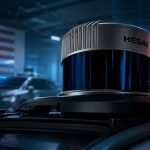
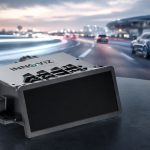
The newer generation of solid state lidar sensors differs dramatically from the large rotating rooftop systems many consumers associate with robotaxis. Modern units are smaller, more aerodynamic, cheaper to produce, and easier to integrate into consumer vehicles without radically altering vehicle design.
For Rivian, integrating lidar into the R2 could eventually strengthen:
- Highway assisted driving.
- Obstacle detection precision.
- Low visibility navigation.
- Urban environment mapping.
- Future hands free driving capabilities.
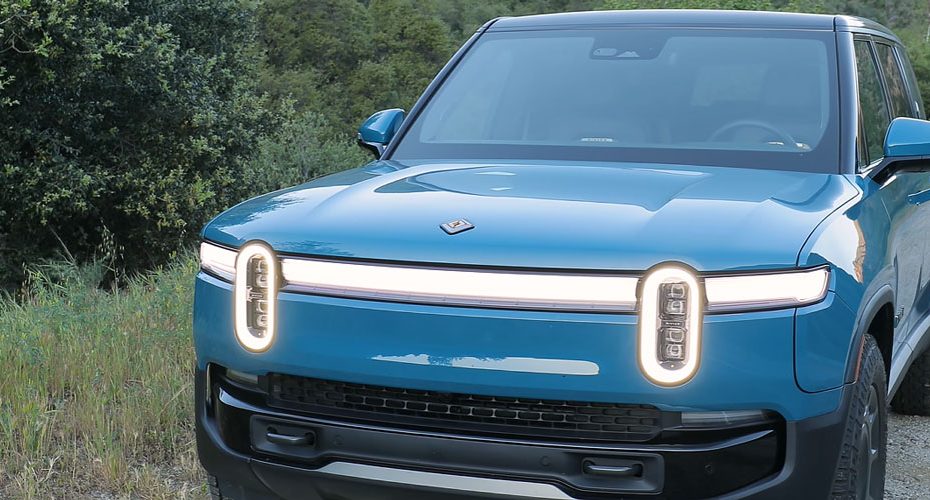
The company had previously demonstrated R2 prototypes featuring a compact roof mounted lidar unit, confirming that lidar integration has already been engineered into the vehicle platform.
First Rivian R2 models launch without lidar
Despite the long term plan, the initial production versions of the R2 are expected to launch without lidar hardware installed.
Rivian reportedly chose to prioritize production speed and manufacturing simplicity for the early rollout. The first R2 models instead use an upgraded version of Rivian’s Gen2 electrical architecture already found in the latest R1T and R1S.
These vehicles still receive significant sensor upgrades, including:
- 65 megapixel HDR camera systems.
- Enhanced dual mode corner radar.
- Improved perception processing hardware.
- Expanded driver assistance capability.
This is a practical move from an engineering and manufacturing standpoint. Launching an entirely new platform while simultaneously scaling lidar production would substantially increase execution risk for a company still working toward sustained profitability.
Rivian may be following the future industry playbook
The most interesting part of this story is not simply the lidar itself. It is the broader manufacturing strategy behind it.
If Rivian successfully combines Chinese lidar innovation with U.S. based production, it could create a hybrid supply chain model that other automakers eventually follow. The United States currently trails China in several advanced EV component categories, particularly in sensor manufacturing and battery supply chains.
Rivian appears to recognize that completely ignoring Chinese technological leadership in these sectors may not be realistic. Instead, the company could attempt to internalize the technology while localizing manufacturing and integration.
From a market perspective, that approach may ultimately prove more competitive than depending entirely on external suppliers.
About Rivian
Rivian is an American electric vehicle manufacturer founded in 2009 and headquartered in Irvine, California. The company currently produces the R1T electric pickup, R1S electric SUV, and commercial delivery vans developed in partnership with Amazon. Rivian delivered more than 50,000 vehicles in 2025 and continues expanding its Normal, Illinois manufacturing facility while preparing for the launch of the more affordable R2 platform expected to play a major role in the company’s global growth strategy.