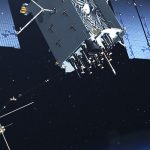
A new Global Positioning System satellite has entered orbit, marking another step in reinforcing secure navigation and timing for military and civilian users worldwide. The U.S. Space Force successfully launched GPS III SV09, built by Lockheed Martin, aboard a SpaceX Falcon 9 rocket from Cape Canaveral Space Force Station.
The satellite is named in honor of Ellison Onizuka, a U.S. Air Force officer and astronaut who flew aboard Space Shuttle Discovery and is remembered as a pioneer in American spaceflight.
GPS III SV09 Delivers Anti Jamming and Secure M Code Capability
GPS III SV09 introduces advanced security features designed specifically for military operations in contested and denied environments. The satellite supports encrypted M code signals, significantly improving resistance to jamming and interference while maintaining precise positioning, navigation, and timing for warfighters.
Compared with earlier generations, GPS III satellites provide up to three times better accuracy and eight times stronger anti jamming performance. These improvements directly enhance mission assurance for defense users while also strengthening the resilience of the overall constellation.
Demonstration Payloads Improve Future GPS Resilience
In addition to its operational role, GPS III SV09 carries a demonstration payload focused on expanding future connectivity and resilience. One key feature is a laser retroreflector array, which supports more accurate measurements of Earth orientation and improves long term alignment of the GPS coordinate framework.
These enhancements are not only relevant for defense missions but also for scientific and geodetic applications that depend on stable, highly precise global reference systems.
Impact on Civil and Commercial Markets Beyond Defense
While GPS III SV09 is optimized for military use, its benefits extend well beyond national security. More resilient and accurate GPS signals directly support sectors such as aviation, precision agriculture, telecommunications timing, emergency response, and autonomous systems.
As GPS interference and spoofing become more common globally, the deployment of newer satellites strengthens confidence in satellite navigation services. This, in turn, supports continued investment in GNSS dependent technologies across transportation, agriculture, and industrial automation markets.
The launch also reinforces confidence ahead of the upcoming GPS IIIF generation, which is expected to deliver dramatically higher anti jam performance and expanded signal flexibility. Together, GPS III and IIIF form a bridge toward a more robust and adaptable positioning infrastructure.
GPS III Production Complete as Focus Shifts to GPS IIIF
With SV09 now in orbit, Lockheed Martin has completed production of GPS III SV01 through SV10 spacecraft. Operational control of SV09 is currently being managed from the company’s Launch and Checkout Operations Center in Denver until formal acceptance into the GPS operational control network.
Manufacturing is now underway on next generation GPS IIIF satellites, which will further increase signal power, cybersecurity, and mission flexibility for both military and civilian users.
About Lockheed Martin
Lockheed Martin is the prime contractor for the GPS III and GPS IIIF satellite programs. Founded in 1995 through the merger of Lockheed Corporation and Martin Marietta, the company reported approximately $67 billion in revenue in 2024 and employs more than 120,000 people worldwide.
To date, Lockheed Martin has delivered over 30 GPS satellites across multiple generations, supporting one of the most widely used and economically critical space based infrastructures in the world.