Locus Lock has secured a new strategic funding round led by Range Ventures as the Colorado-based navigation technology company prepares to expand deployment of its software-defined GNSS architecture across defense, aerospace and autonomous platforms.
The round, announced September 24, 2026, also includes In-Q-Tel, Backswing Ventures, Aurelia Foundry, Techstars, Golden Seeds, Creations VC, POV Ventures and other investors. Financial terms were not disclosed.
The funding comes as Locus Lock moves beyond development and customer testing toward wider commercialization of resilient positioning, navigation and timing technology. A key part of that push will be Leo200, a new software-defined GNSS receiver platform scheduled for availability in October 2026.
Software-Defined GNSS Targets GPS Threats
Traditional GNSS receivers typically combine dedicated RF hardware, signal-processing components and embedded firmware built around a defined set of satellite signals and operating requirements.
Locus Lock takes a different approach. Much of the GNSS signal processing is implemented in software running on general-purpose computing hardware. This allows receiver capabilities to be modified or expanded without necessarily redesigning the complete hardware platform.
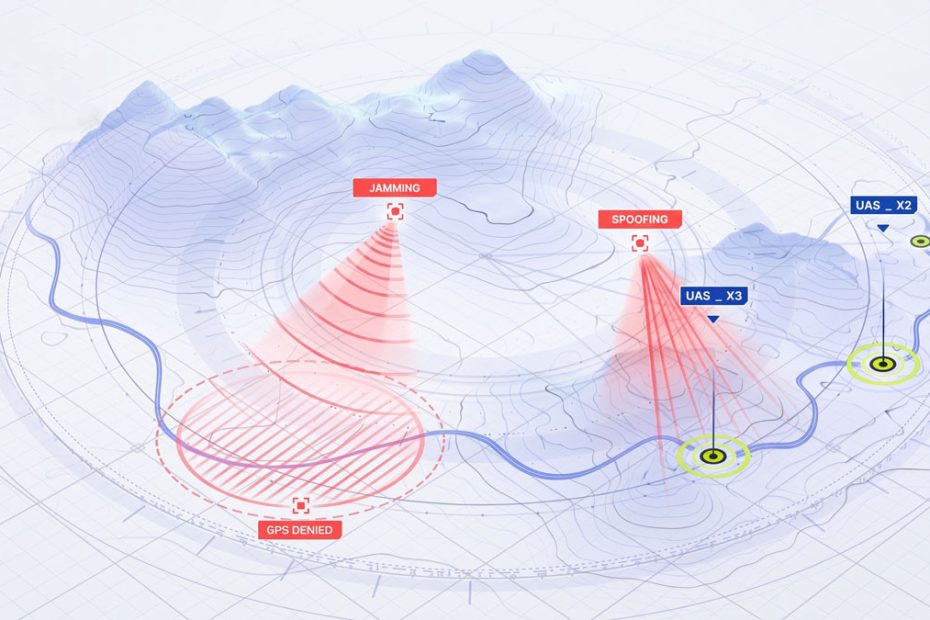
The architecture is aimed particularly at applications where satellite navigation cannot be assumed to remain clean and reliable. That includes environments affected by intentional jamming, spoofing, interference or degraded satellite visibility.
The company says its technology has already undergone several years of development and field testing with aerospace and defense customers. It is now being integrated into systems operating across air, ground, maritime and space domains.
For military and autonomous applications, that flexibility could be important. GNSS interference techniques can change much faster than traditional receiver qualification and hardware development cycles.
A receiver that can accept new signal-processing algorithms through software therefore offers a different upgrade model from a fixed-function navigation unit.
Leo200 Launch Set for October
The most immediate commercial milestone is Leo200, which Locus Lock plans to launch in October 2026.
The platform combines a software-defined GNSS engine with a single-antenna, quadruple-frequency RF front end. It also supports inertial sensor fusion and magnetometer data, while being designed around size, weight and power requirements relevant to embedded aerospace and defense systems.
Locus Lock is initially offering Leo200 as an evaluation platform. Engineering teams can install the receiver software, connect it to their own systems and conduct laboratory and field testing before moving toward a production configuration.
The company’s current product listing prices the Leo200 evaluation package from $995 and includes a one-year fully featured evaluation license. A Raspberry Pi 5 development kit is also offered as a configuration option. Locus Lock says production customers will later be able to choose standard or customized integrations, with perpetual software licensing available without subscription fees.
That evaluation-first model is important because GNSS performance is highly application-dependent. A receiver that performs well on a stationary test bench may face a very different RF environment when installed on an aircraft, unmanned vehicle, ship or mobile ground platform.
Funding Supports Leo200 and Engineering Expansion
Locus Lock plans to use the new capital to expand customer deployments, continue development of its software-defined PNT technology and grow its engineering organization.
The investment also provides additional backing for the Leo200 rollout.
Range Ventures led the round, while In-Q-Tel’s participation is particularly relevant because of the company’s focus on technologies with potential national-security and intelligence applications.
Locus Lock has previously attracted investment from several technology and defense-focused investors. In December 2024, the company announced an oversubscribed financing round backed by AIN Ventures, Aurelia Foundry, Creations VC, Jolt VC, ffVC, Techstars and the University of Texas Seed Fund.
The University of Texas at Austin later disclosed a separate $150,000 investment in Locus Lock through its UT Seed Fund in March 2025.
Why Software-Defined GNSS Matters
The bigger story is not simply another GNSS receiver entering the market. It is the gradual separation of advanced GNSS processing from dedicated receiver hardware.
Software-defined radio has already transformed communications systems by moving functions that once required specialized electronics into programmable computing platforms. Applying the same principle to satellite navigation could shorten the time required to support new frequencies, signals, interference mitigation techniques and integrity-monitoring algorithms.
That becomes increasingly relevant as navigation systems are expected to operate across several GNSS constellations while simultaneously detecting or rejecting manipulated signals.
There is also a significant engineering tradeoff.
Moving more functionality into software does not automatically make a navigation system resilient. Anti-jamming performance still depends on RF design, antennas, front-end dynamic range, filtering, inertial integration and the algorithms used to identify corrupted signals.
Software-defined GNSS should therefore be viewed as an architecture that can accelerate adaptation, rather than as a substitute for good RF engineering.
The Upgrade Cycle Could Be the Bigger Advantage
The most interesting aspect of Locus Lock’s approach is not that its receiver is software-defined. GNSS software-defined radio research has existed for years.
What matters commercially is whether that architecture can be packaged into a platform that engineers can actually integrate into production equipment.
Leo200 appears designed to address exactly that gap.
Providing a relatively inexpensive evaluation platform lowers the barrier for developers that want to experiment with advanced GNSS processing without committing immediately to a custom receiver program. If the same software environment can then move into production hardware, Locus Lock could shorten the path between algorithm development, testing and deployment.
That could be particularly valuable in defense.
A GNSS receiver designed around a fixed threat model may remain in service for many years, while spoofing and jamming methods can evolve far more quickly. A platform capable of receiving meaningful signal-processing improvements through software has a structural advantage in that environment.
However, the real test will be measurable performance under interference. Low acquisition cost and architectural flexibility will matter only if Leo200 can maintain positioning integrity and availability when conventional GNSS receivers begin to fail.
Independent performance data covering jammer resistance, spoofing detection, reacquisition behavior and inertial bridging will ultimately be more important than the software-defined label itself.
About Locus Lock
Locus Lock is a privately held GNSS and positioning technology company headquartered in Westminster, Colorado.
The company was founded by aerospace engineer Hailey Nichols in 2021 and emerged from research conducted at the University of Texas at Austin’s Radionavigation Laboratory under professor Todd Humphreys. UT Austin describes the company as a commercialization of software-defined GNSS receiver technology developed through the laboratory’s navigation research.
Nichols holds a bachelor’s degree in aerospace engineering from MIT and a master’s degree in aerospace engineering from the University of Texas at Austin. Before founding Locus Lock, she worked as a UAV software engineer at Aurora Flight Sciences, a Boeing subsidiary.
The company remains a small engineering-focused operation. Its LinkedIn profile currently lists a workforce of 2 to 10 employees, with eight employees publicly associated with the company and more than 1,100 followers.
Locus Lock was also selected for the Techstars Space Accelerator in 2023 and has received backing from the University of Texas Seed Fund as it moves its GNSS technology from university research into commercial aerospace, defense and autonomous-system applications.