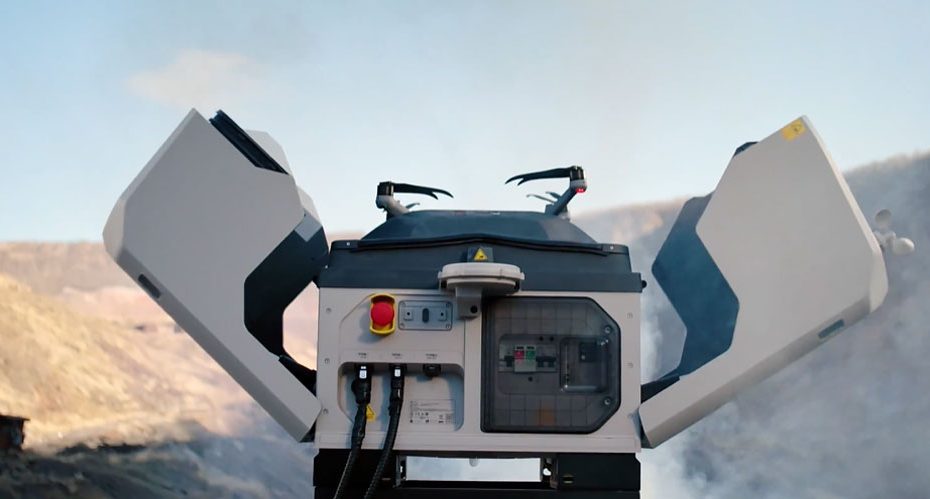
DJI has released new details showcasing the precision landing capabilities of its DJI Dock 3 platform, demonstrating how RTK positioning technology enables enterprise drones to return to their docking stations with centimeter level accuracy and complete automation.
The latest demonstration focuses on one of the most important challenges in autonomous drone operations: ensuring reliable and repeatable landings without human intervention. As organizations increasingly deploy drones for inspections, security patrols, infrastructure monitoring, and mapping, automated docking systems are becoming a critical part of the operational workflow.
RTK Landing Accuracy
According to DJI, the Dock 3 system combines Real Time Kinematic (RTK) positioning with automated flight control algorithms to guide aircraft back to the docking station with highly precise positioning.
Unlike traditional GNSS navigation, RTK corrections significantly improve positional accuracy, allowing the drone to consistently land within a very small tolerance zone. This level of precision is essential for autonomous charging, mission scheduling, and continuous remote operations where no operator is present on site.
The technology is designed to eliminate the need for manual landing adjustments, helping organizations reduce labor requirements while increasing operational consistency.
Enterprise Drone Automation
The significance of DJI Dock 3 extends beyond landing accuracy itself.
Enterprise drone programs often struggle with scalability because every flight traditionally requires operator involvement for takeoff, monitoring, and recovery. Automated docking systems change that equation by allowing fleets to execute scheduled missions with minimal human oversight.
Potential applications include:
- Utility infrastructure inspections.
- Solar and wind farm monitoring.
- Construction site documentation.
- Security and perimeter patrols.
- Telecommunications tower inspections.
- Environmental monitoring.
For these industries, reducing manual intervention can improve operational efficiency while enabling more frequent data collection.
Dock Based Operations Gain Momentum
The drone industry is increasingly moving toward “drone in a box” solutions where aircraft remain permanently deployed in remote locations and automatically perform missions as needed.
Precision landing is one of the key technologies that makes these systems viable. Even small positioning errors can prevent successful charging or mission readiness, making reliable docking performance essential for long term autonomous deployments.
As more organizations look to integrate drones into daily operations rather than occasional projects, systems such as Dock 3 are likely to become a larger segment of the commercial drone market.
Centimeter Accuracy Could Become a Competitive Advantage
One of the most interesting aspects of DJI’s demonstration is not the RTK technology itself, which has been widely used in surveying and precision agriculture for years, but how seamlessly it is being integrated into a fully autonomous workflow.
The real value is not landing a drone accurately once. The value comes from performing thousands of landings across months of operation without requiring human intervention. If DJI can consistently deliver that level of reliability in real world environments, it strengthens the business case for autonomous drone infrastructure and raises the competitive bar for other enterprise drone manufacturers.
For large utility operators, security providers, and industrial asset owners, reliability may ultimately matter more than flight performance alone.
About DJI
DJI was founded in 2006 and has grown into the world’s largest drone manufacturer. The company is estimated to control more than 70% of the global consumer drone market and maintains a significant presence in commercial and enterprise UAV segments. DJI products are used in over 100 countries across industries including agriculture, public safety, construction, surveying, filmmaking, and infrastructure inspection. Beyond drones, the company also develops camera stabilization systems, imaging sensors, robotics, and enterprise automation platforms.