China may have moved one step closer to giving its submarines the ability to navigate for long periods without relying on GPS or external positioning systems, a development that could significantly complicate future U.S. Navy anti submarine warfare operations in the Indo Pacific.
Researchers from the Xinjiang Technical Institute of Physics and Chemistry reportedly achieved a major scientific milestone by generating ultraviolet light at a 145.2 nanometer wavelength, surpassing the threshold required to activate thorium 229 nuclear transitions. The achievement is considered a key prerequisite for developing operational thorium based nuclear clocks, one of the most advanced timing technologies currently under research worldwide.
Thorium Nuclear Clock Technology
Unlike conventional atomic clocks that rely on electron oscillations, nuclear clocks measure energy transitions directly inside an atomic nucleus. In theory, this makes them dramatically less sensitive to environmental disturbances such as electromagnetic interference, vibration, radiation, or temperature fluctuations.
For military navigation systems, this matters because positioning accuracy slowly drifts over time when submarines rely purely on inertial navigation systems. Current submarines periodically require satellite corrections or surface level updates to maintain precision navigation data. Those moments often create opportunities for detection by enemy surveillance systems.
If thorium nuclear clocks become operational aboard submarines, Chinese naval forces could potentially maintain extremely precise navigation data for far longer periods while remaining fully submerged.
Impact On U.S. Navy Anti Submarine Warfare
The strategic implications are substantial.
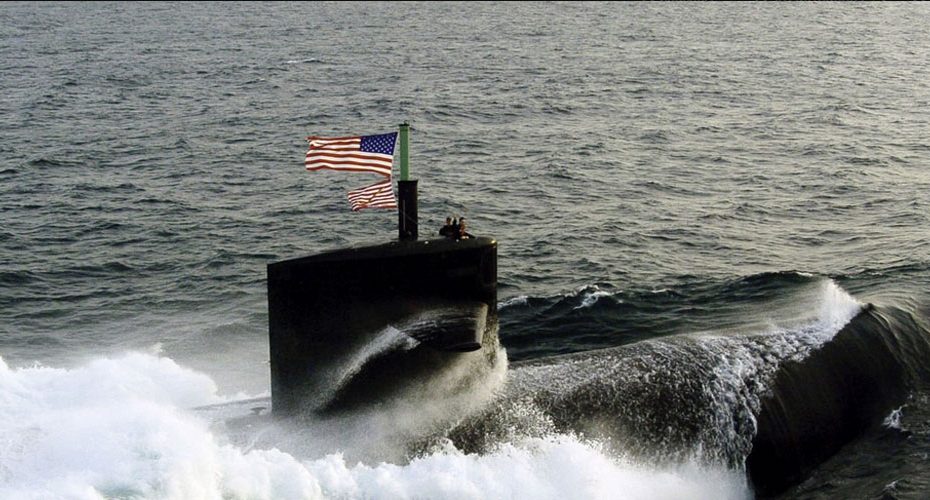
For decades, U.S. anti submarine warfare doctrine has depended heavily on persistent tracking, prediction modeling, acoustic monitoring, and exploiting moments when submarines expose themselves to update navigation systems.
American undersea surveillance architecture combines multiple layers including:
- Virginia class attack submarines;
- P 8A Poseidon maritime patrol aircraft;
- fixed seabed sonar arrays;
- space based surveillance systems;
- electronic intelligence platforms;
- carrier strike group support assets.
A submarine capable of maintaining high precision navigation independently for extended deployments becomes significantly more unpredictable. It reduces electronic exposure, decreases opportunities for satellite tracking, and complicates long duration shadowing operations.
From a technical perspective, this is not simply about navigation accuracy. It is about survivability, stealth persistence, and reducing dependency on vulnerable space based infrastructure during wartime.
Taiwan Conflict Scenario
The technology becomes even more important in a potential Taiwan conflict scenario.
Chinese ballistic missile submarines operating inside protected maritime zones near the South China Sea could maintain more secure second strike nuclear deterrence patrols while remaining harder to track. Meanwhile, attack submarines could operate with greater freedom against U.S. naval assets supporting regional operations around Taiwan.
Another critical factor involves electronic warfare.
Modern U.S. military doctrine increasingly focuses on degrading adversary GPS access through jamming, spoofing, cyber attacks, and anti satellite operations. A military platform capable of maintaining precision navigation without external satellite reliance becomes inherently more resistant to those tactics.
This aligns closely with broader Chinese military modernization efforts involving quantum sensing, autonomous underwater systems, resilient communications, artificial intelligence assisted targeting, and alternative positioning technologies.
Major Engineering Challenges Remain
Despite the attention surrounding the breakthrough, operational deployment remains far from guaranteed.
Generating the required ultraviolet wavelength inside a laboratory environment is only one part of the challenge. Chinese researchers still need to prove:
- long term clock stability;
- miniaturization for submarine integration;
- resistance to shock and vibration;
- pressure tolerance in naval environments;
- reliable deployment under real combat conditions.
Submarine systems face some of the harshest engineering conditions in military technology. Translating laboratory physics into deployable fleet hardware could take many years.
Why This Development Matters
From an analytical perspective, the most important aspect of this breakthrough is not that China suddenly created invisible submarines. That narrative would be exaggerated.
The real significance is that global naval competition is increasingly shifting away from pure platform superiority toward infrastructure independence. Future naval warfare may depend less on who has the largest fleet and more on who can continue operating effectively when satellites, communications, and navigation systems are degraded or destroyed.
If China successfully operationalizes thorium nuclear clocks before the United States deploys comparable systems at scale, it could gradually erode one of Washington’s most valuable asymmetric advantages in undersea warfare: predictive submarine tracking.
The broader implication is that the next generation of naval competition may increasingly revolve around autonomous positioning, resilient timing systems, quantum sensing, and navigation technologies capable of functioning in fully contested electromagnetic environments.
About The Chinese Navy Modernization Effort
The People’s Liberation Army Navy is now the world’s largest navy by number of battle force ships, with more than 370 naval vessels according to recent Pentagon assessments. China continues expanding its submarine fleet through platforms such as the Type 093 nuclear attack submarine, Jin class ballistic missile submarine, and future Type 096 strategic submarine programs. Beijing has also invested heavily in quantum technologies, hypersonic weapons, autonomous systems, and alternative navigation capabilities designed to reduce dependence on vulnerable satellite infrastructure during high intensity warfare.