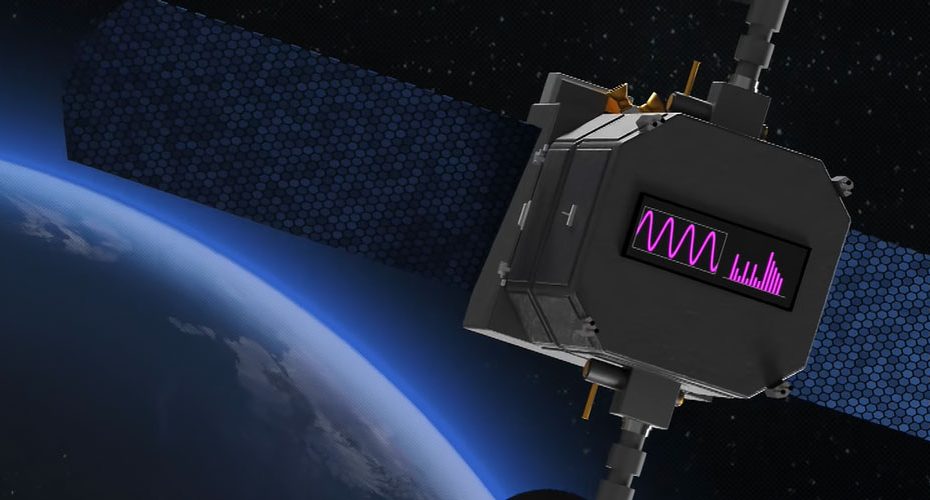
Chinese researchers have reported a materials breakthrough that could move nuclear clock technology closer to practical deployment, with direct implications for navigation systems that operate without reliance on satellite signals. The work centers on a newly developed ultraviolet-generating crystal designed to support the precise laser requirements needed to measure thorium-based nuclear transitions.
New UV crystal pushes laser wavelength closer to thorium-229 resonance threshold
The research team from Xinjiang University describes a fluorinated borate crystal capable of converting laser output into deep ultraviolet light at approximately 145.2 nanometers. This represents a measurable step beyond prior limits near 150 nanometers, narrowing the gap toward the ~148.3 nanometer wavelength required to excite the nuclear transition in thorium-229.
That transition is the foundation for a nuclear clock, a next-generation timekeeping system that tracks oscillations within an atomic nucleus rather than electron energy levels. While atomic clocks already underpin GPS and other positioning systems, nuclear clocks are expected to deliver significantly higher stability and resistance to environmental interference.
Why nuclear clocks matter for navigation without GPS signals
Modern navigation systems are fundamentally time-based. Position is calculated by measuring the time it takes for signals to travel from satellites to a receiver. Any improvement in timing precision directly translates into improved positional accuracy.
In environments where satellite signals are unavailable or unreliable, this model breaks down. Submarines operating underwater, spacecraft beyond Earth orbit, and military platforms exposed to jamming or spoofing cannot depend on continuous GNSS access.
This is where nuclear clocks become relevant. Their projected accuracy, potentially an order of magnitude or more beyond current atomic standards, enables high-precision dead reckoning. By combining velocity, direction, and ultra-stable time measurement, a system can continuously update its position without external references for extended periods.
Submarines, missiles, and deep-space systems stand to gain from autonomous timing
The immediate use case is naval. Submarines today must periodically surface or deploy antennas to receive satellite signals, exposing them to detection. A compact nuclear clock could allow fully submerged navigation without external input.
The same principle applies to missile guidance systems, where resilience against electronic warfare is a growing requirement. A navigation system that does not rely on externally transmitted signals is inherently resistant to jamming and spoofing.
In space, the implications extend further. Deep-space missions currently depend on Earth-based tracking and correction. High-precision onboard clocks could enable autonomous navigation using alternative references such as pulsars or stellar positioning, reducing dependence on ground infrastructure.
Technical bottleneck remains laser precision, not clock theory
The concept of a thorium-229 nuclear clock has been studied for years, but practical implementation has been limited by the difficulty of generating stable, narrow-band ultraviolet light at the exact required wavelength.
The newly reported crystal does not yet reach the target resonance point but reduces the gap to a level that is considered technically significant. If further refinements achieve consistent output at or near 148.3 nanometers, it would remove one of the main barriers to experimental nuclear clock systems transitioning into engineered platforms.
No performance specifications, integration timelines, or system-level prototypes have been disclosed at this stage. The work remains at a materials and laboratory validation level.
Reducing dependence on GNSS infrastructure
The development aligns with a broader global trend toward navigation redundancy. GNSS systems such as GPS, BeiDou, and Galileo remain central to positioning, but their vulnerabilities are well documented. Jamming and spoofing incidents have increased across both military and civilian domains.
A viable nuclear clock would not replace satellite navigation but would act as a parallel system, extending operational capability in denied or degraded environments. The focus is not on replacing GNSS, but on removing it as a single point of failure.
About Xinjiang University
Xinjiang University is a public research institution based in Urumqi, China. Founded in 1924, it is one of the region’s key academic centers, with programs spanning physics, materials science, and engineering. The university has been involved in multiple state-supported research initiatives, particularly in advanced materials and photonics. Publicly available data indicates a student population exceeding 30,000 and ongoing participation in national-level scientific research programs focused on emerging technologies.