Australia’s autonomous robotics specialist Emesent is entering a new phase of growth after raising $17 million to expand manufacturing capacity and accelerate development of its AI driven autonomy platform. The investment reflects growing demand for robotic mapping systems capable of operating where satellite navigation is unavailable, a capability that is becoming increasingly valuable across mining, defense, and critical infrastructure.
Rather than focusing solely on higher production volumes, the company is using the funding to strengthen both hardware manufacturing and software development, positioning itself for broader global adoption.
Manufacturing expansion in Australia
The new capital will be directed toward expanding Emesent’s manufacturing operations at its facility in Wacol, Queensland. Increasing production capacity is intended to shorten delivery times while supporting rising international demand for the company’s autonomous mapping systems.
Alongside manufacturing, Emesent plans to invest heavily in its Cortex AI autonomy platform and Aura cloud software, two technologies that extend the capabilities of its LiDAR hardware beyond simple data collection.
The strategy signals that the company sees long term value not only in selling sensors, but in building a complete autonomous inspection ecosystem that combines onboard intelligence, cloud processing, and advanced spatial analytics.
GPS denied robotics remain a fast growing market
One of Emesent’s biggest competitive strengths is its ability to operate in environments where conventional GNSS positioning is unreliable or completely unavailable.
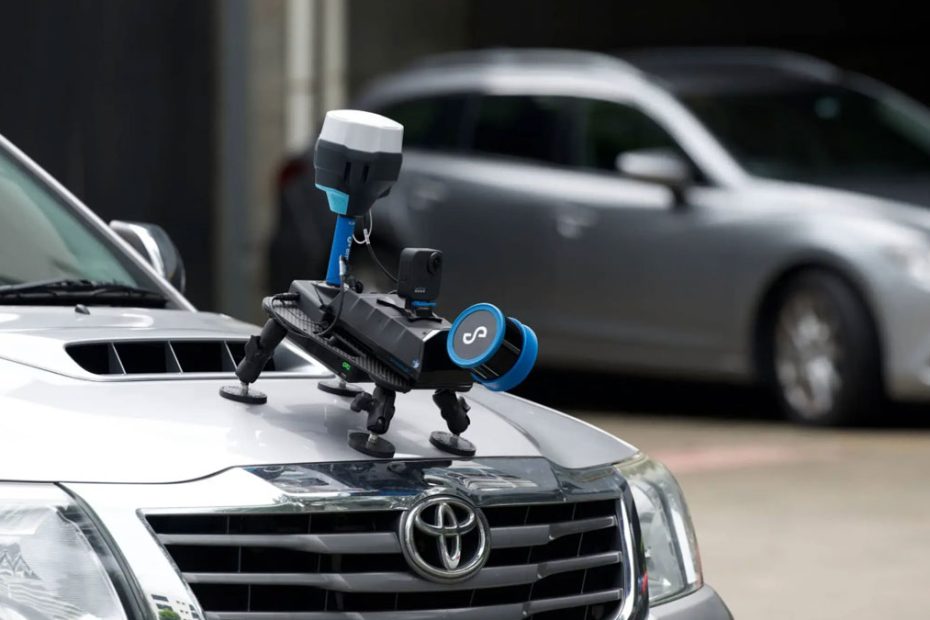
Its Hovermap STX payload and GX1 scanner rely on simultaneous localization and mapping technology, allowing drones and robotic platforms to navigate complex underground mines, industrial facilities, tunnels, and other confined spaces without GPS signals.
As industries place greater emphasis on automation, digital twins, and worker safety, demand for autonomous inspection platforms continues to rise. Mining companies, infrastructure operators, and defense organizations increasingly need robots that can collect accurate spatial data while reducing the need for personnel to enter hazardous environments.
The latest investment suggests investors expect this market to continue expanding as autonomous robotics become a standard tool for industrial operations rather than a niche technology.
Investment supports long term AI strategy
Although manufacturing expansion is the immediate priority, the broader significance of this funding lies in software.
Modern autonomous mapping systems increasingly compete on artificial intelligence, navigation algorithms, obstacle avoidance, and automated mission planning instead of raw sensor performance alone.
By investing simultaneously in AI, autonomy, cloud software, and production capacity, Emesent is following a strategy similar to leading robotics companies that seek to control the entire technology stack rather than individual hardware components.
That approach should improve scalability while creating additional recurring software revenue opportunities in the future.
Industry perspective
This funding round is another indication that industrial robotics is evolving beyond specialized inspection tools into complete autonomous operational platforms. Companies capable of combining high quality LiDAR sensing, reliable autonomy, and cloud based analytics are likely to capture a growing share of infrastructure, mining, and defense projects over the coming decade.
Emesent appears to recognize that future competition will be driven as much by software intelligence as by sensor hardware, making this investment strategically more important than a simple manufacturing expansion.
About Emesent
Founded in 2018 and headquartered in Brisbane, Australia, Emesent develops autonomous LiDAR mapping solutions for mining, engineering, construction, defense, and critical infrastructure. The company’s flagship Hovermap platform combines SLAM based navigation with autonomous flight and robotic inspection capabilities in GPS denied environments. According to the company, Hovermap systems are currently deployed at more than 200 mining sites worldwide, making Emesent one of the leading specialists in autonomous underground and industrial mapping.
Source: www.emesent.com