Czech UAV manufacturer U&C UAS has introduced the STORK LR, a long range unmanned aerial system specifically engineered for operations where satellite navigation cannot be reliably trusted. The platform was publicly unveiled during the World Defense Show 2026 in Riyadh and is positioned for missions in high electronic warfare environments where GNSS disruption is expected rather than exceptional.
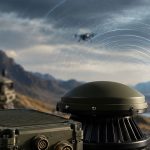
At the core of the system is a hardened satellite navigation receiver capable of resisting both intentional jamming and spoofing attempts. According to the manufacturer, the onboard anti electronic warfare suite continuously monitors signal integrity across GPS and multi constellation GNSS channels and automatically switches to protected navigation modes when interference is detected.
This capability is increasingly critical as modern conflict zones and sensitive border regions see widespread deployment of electronic warfare systems designed to degrade positioning accuracy or deny access entirely.
Mesh networking extends operational range beyond line of sight constraints
One of the defining architectural features of the STORK LR is its integrated airborne mesh networking capability. Multiple drones can dynamically form a relay network, allowing one aircraft to act as a communications bridge for others.
This approach significantly extends operational reach beyond traditional radio line of sight limits and helps mitigate terrain masking effects such as mountainous environments or urban obstacles. It also provides resilience against localized signal disruption, enabling continuous command, telemetry, and real time video transmission through encrypted two way links.
The drone’s maximum operational radius is reported at up to 135 kilometers depending on network configuration and mission profile.
Long endurance electric propulsion optimized for surveillance missions
The STORK LR is designed primarily for persistent surveillance and reconnaissance roles. The aircraft features a fixed wing configuration with a wingspan of 3.4 meters and an overall length of approximately 1.48 meters.
With a maximum takeoff weight of around 14 kilograms, the platform is powered by an electric propulsion system that enables quiet operation and extended endurance. The drone can remain airborne for up to five hours and operate at altitudes reaching approximately 4,500 meters.
An advanced onboard autopilot supports fully autonomous flight planning, waypoint navigation, and contingency handling, reducing operator workload during long duration missions.
The launch and recovery system is optimized for field deployment. The aircraft can be launched via pneumatic catapult and recovered using reinforced belly landing, eliminating the need for prepared runways or complex ground infrastructure.
Growing demand for EW resilient UAV navigation
The STORK LR reflects a broader trend across the UAV industry toward navigation systems capable of functioning in GNSS contested environments. Traditional reliance on satellite positioning alone is increasingly viewed as a vulnerability, prompting manufacturers to integrate hardened receivers, signal authentication technologies, and alternative navigation methods such as inertial systems and visual odometry.
As electronic warfare capabilities continue to proliferate globally, drones designed with resilient navigation architectures are expected to become standard rather than specialized platforms.
About U&C UAS
U&C UAS is a Czech aerospace engineering company specializing in unmanned aerial systems for defense, security, and industrial applications. The firm focuses on long endurance fixed wing UAV platforms and electronic warfare resilient navigation technologies.
While privately held and not publicly disclosing full financials, the company reports active deployments of its UAV systems across multiple European and Middle Eastern markets and has participated in several NATO aligned technology programs focused on secure communications and autonomous surveillance systems.