ANELLO Photonics has secured $25 million in a Series B-2 funding round aimed at scaling production of its chip-scale inertial navigation systems built for environments where GNSS signals are unreliable or completely unavailable.
The round was led by MESH, with additional participation from Washington Harbour Partners and a group of existing strategic and financial investors, including Lockheed Martin Ventures. The structure of the round signals continued alignment between defense-driven demand and commercial autonomy markets.
SiPhOG technology brings optical gyro performance to chip scale
At the core of ANELLO’s platform is its SiPhOG architecture, a silicon photonics optical gyroscope designed to replicate the performance class of fiber optic gyros while reducing size, cost, and manufacturing complexity.
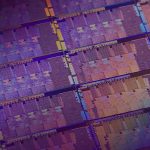
Unlike traditional fiber optic gyroscopes, which rely on precision wound fiber coils and expensive assembly processes, SiPhOG leverages semiconductor fabrication. This allows tighter integration, higher production scalability, and a clearer path toward volume deployment across autonomous systems.
From a technical standpoint, this matters because inertial navigation is the only reliable fallback when GNSS fails. In contested environments, spoofing, jamming, or signal blockage can render satellite-based positioning unusable. A compact optical gyro that maintains stability over time directly addresses drift, which remains the main limitation of lower-cost MEMS-based systems.
Defense demand and autonomy markets drive scaling strategy
The funding follows a $20 million award under the U.S. Army APFIT program announced in January 2026. That contract was specifically aimed at accelerating procurement and field deployment of ANELLO’s navigation systems.
This dual track of venture funding plus government backing is not случайность. It reflects a broader shift where resilient navigation is becoming a baseline requirement not only for defense platforms, but also for commercial autonomy stacks including UAVs, ground robotics, and maritime systems.
The inclusion of investors tied to defense and deep tech ecosystems reinforces that positioning. It also suggests that production readiness and supply chain scaling are now more critical than early-stage R&D.
Market perspective on silicon photonics INS
There is a clear gap in the navigation stack today. High-end fiber optic and ring laser gyros deliver precision but remain expensive and bulky. MEMS solutions scale well but suffer from drift in GNSS-denied conditions.
ANELLO is targeting that middle ground. If SiPhOG can consistently deliver near fiber-level performance at semiconductor scale economics, it has the potential to reset pricing and adoption curves across multiple industries.
The key risk is long-term stability and real-world validation under dynamic conditions. Optical systems at chip scale introduce their own sensitivity challenges, including thermal effects and signal noise. The success of this approach will depend on how well those are controlled in production units, not just in lab environments.
About ANELLO Photonics
Founded in Santa Clara, California, ANELLO Photonics focuses on inertial navigation systems built on silicon photonics. The company’s flagship SiPhOG technology is designed to deliver high-performance optical gyro capabilities in a compact, manufacturable format.
The company has built a portfolio of more than 80 issued and pending patents and integrates its hardware with an AI-driven sensor fusion engine to improve navigation accuracy in degraded signal environments. Recent funding and a $20 million U.S. Army contract position ANELLO as one of the more aggressive players in the emerging GPS-denied navigation segment.