Ground Control and Ambrey have introduced RockFLEET Assured, a new positioning, navigation, and timing solution designed to maintain reliable vessel tracking in environments where GNSS signals are compromised or unavailable.
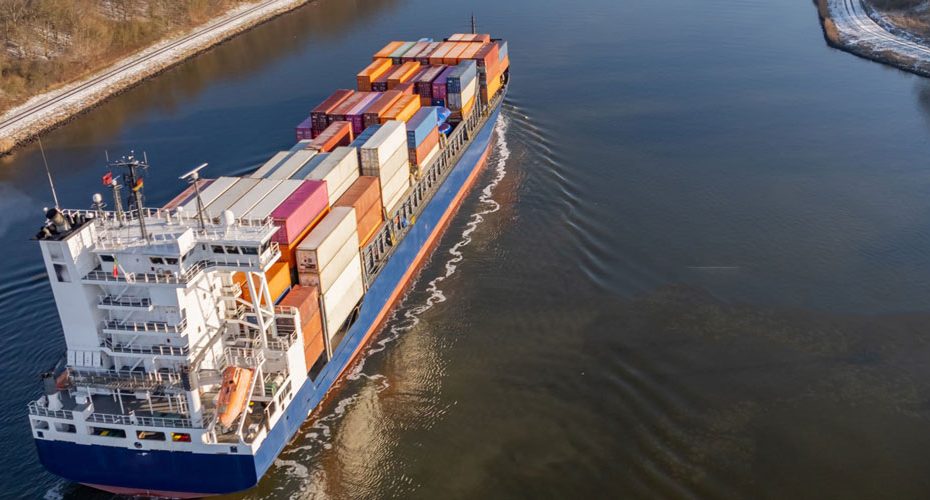
The launch comes at a time when interference with satellite navigation has moved from isolated incidents to a persistent operational risk. Key maritime corridors including the Arabian Gulf, the Baltic Sea, the Black Sea, and the Strait of Hormuz are now regularly affected by jamming and spoofing, creating real-world navigation hazards for commercial fleets.
RockFLEET Assured is positioned as an independent layer of positioning resilience. Instead of relying solely on conventional GNSS, the system uses an Iridium-based satellite communication module combined with authenticated positioning logic to maintain track integrity even in GPS-denied scenarios.
Iridium-based positioning and two-way satellite messaging redefine maritime redundancy strategies
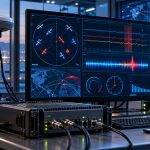
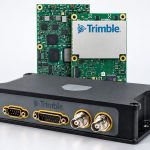
At the hardware level, the system integrates a marine-grade smart antenna with two-way satellite messaging. This architecture allows vessels not only to transmit positioning data but also to validate it through external channels, enabling both onboard verification and continuous shore-side monitoring.
From a systems perspective, this is a shift away from passive navigation toward actively verified positioning. Traditional GNSS receivers trust incoming signals by default. Solutions like RockFLEET Assured introduce an authentication layer, which is increasingly critical as spoofing attacks become more sophisticated.
The use of the Iridium network is also strategic. Unlike GNSS, which is vulnerable to interference at the signal level, Iridium operates as a communication backbone, allowing position data to be cross-checked, transmitted, and monitored independently of local signal conditions.
Maritime risk management platforms integrate resilient navigation as standard capability
Ambrey is embedding RockFLEET Assured into its maritime risk management ecosystem, extending the solution beyond standalone hardware into a service-driven model. Through its Global Operations Centre in Southampton, the company will provide continuous monitoring, anomaly detection, and operational support tied directly to vessel tracking data.
This integration reflects a broader market shift. Navigation is no longer treated as an isolated onboard function. It is becoming part of a connected operational intelligence layer that links vessels, fleet managers, and security teams in real time.
Operators are increasingly prioritizing systems that can detect inconsistencies in positioning data, flag suspicious deviations, and maintain situational awareness even under degraded signal conditions.
Market impact analysis as GNSS independent positioning moves from niche to requirement
The introduction of systems like RockFLEET Assured signals a structural change in the maritime technology landscape.
First, GNSS resilience is transitioning from optional redundancy to a baseline requirement in high-risk regions. Insurance providers, charterers, and regulators are likely to push for verified tracking capabilities as part of compliance frameworks.
Second, hybrid positioning architectures will become standard. Future vessel navigation stacks will combine GNSS, satellite communications, inertial systems, and possibly emerging LEO-based PNT services to ensure continuity.
Third, service-based models will dominate. Hardware alone is no longer sufficient. Continuous monitoring, analytics, and integration into operational workflows are becoming key differentiators.
From a broader perspective, this mirrors trends already visible in agriculture, aviation, and autonomous systems, where reliance on a single positioning source is increasingly seen as a critical vulnerability.
What this means for commercial shipping operators and fleet managers
For operators, the implications are immediate:
- Reduced risk of navigation errors in spoofed environments.
- Improved fleet visibility across contested regions.
- Faster detection of anomalies and potential security threats
- Enhanced compliance with evolving maritime safety standards.
In practical terms, systems like RockFLEET Assured shift navigation from a trust-based model to a verification-based model. That transition is likely to define the next generation of maritime operations.
About Ground Control
Ground Control is a UK-based satellite communications provider specializing in IoT connectivity and critical communications infrastructure. The company operates across more than 150 countries and leverages networks such as Iridium to deliver resilient communication solutions for maritime, energy, and remote operations sectors.
About Ambrey
Ambrey is a global maritime risk management company with a strong presence in high-risk shipping regions. The company supports hundreds of vessels annually through intelligence, security services, and operational monitoring. Its Global Operations Centre in Southampton functions as a 24/7 hub for real-time maritime risk analysis and response coordination.
The partnership combines Ground Control’s satellite communication expertise with Ambrey’s operational intelligence platform, creating a vertically integrated solution that addresses both technical and security dimensions of GNSS disruption.