NASA has awarded PlanetiQ an expanded contract under its Commercial Smallsat Data Acquisition (CSDA) program, giving government researchers broader access to a new generation of satellite based atmospheric observations.
The agreement adds PlanetiQ’s high signal to noise ratio (SNR) GNSS Polarimetric Radio Occultation (GNSS PRO) data to the company’s existing NASA data offerings, which already include GNSS radio occultation, ionospheric scintillation, and total electron content measurements.
The move represents another step in NASA’s growing strategy of leveraging commercial satellite constellations to accelerate scientific research while reducing the cost of acquiring Earth observation data.
GNSS PRO Data Targets Precipitation Monitoring
Traditional GNSS radio occultation has become one of the most valuable data sources for modern weather forecasting, providing highly accurate measurements of atmospheric temperature, pressure, and humidity around the globe.
The newly added GNSS Polarimetric Radio Occultation capability goes a step further.
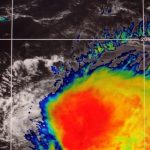
By measuring subtle differences between horizontally and vertically polarized GNSS signals as they pass through precipitation systems, researchers can extract information about rain, snow, melting layers, and storm structure. This technique allows scientists to observe characteristics that conventional GNSS radio occultation cannot directly detect.
The technology is particularly attractive because it can provide global precipitation observations without relying on large, expensive weather radar networks or specialized precipitation satellites.
Higher SNR Improves Weather Detection
One of the key differentiators of PlanetiQ’s system is its use of high SNR GNSS receivers.
Higher signal quality increases sensitivity to weak atmospheric effects, making it easier to identify light precipitation, thin cloud structures, and subtle storm features that may otherwise go unnoticed.
For weather agencies and climate researchers, this could improve understanding of how precipitation develops and evolves, especially in remote regions where conventional observations remain sparse.
As forecasting models increasingly depend on large volumes of high quality observational data, additional GNSS based measurements may help improve both short term weather predictions and long term climate analysis.
Commercial Satellite Data Gains Momentum
NASA’s decision also highlights a broader trend within Earth observation programs.
Government agencies are increasingly purchasing data from private satellite operators rather than relying exclusively on government owned spacecraft. The approach allows agencies to rapidly test new technologies while reducing development timelines and infrastructure costs.
For companies like PlanetiQ, participation in programs such as CSDA provides an opportunity to demonstrate operational value before technologies move into wider adoption by research institutions and forecasting organizations.
The growing demand for commercial weather intelligence has already fueled significant investment across the satellite data sector, particularly in areas such as atmospheric monitoring, climate analytics, and severe weather forecasting.
Potential Beyond Weather Forecasting
While meteorology remains the primary application, the broader GNSS observation capabilities offered by PlanetiQ extend into several other strategic areas.
The company’s datasets are also used for ionospheric monitoring, space weather research, RF environment characterization, and detection of GNSS interference events such as jamming and spoofing.
As governments and defense organizations place greater emphasis on resilient positioning, navigation, and timing systems, these additional applications may become increasingly valuable.
From a technical perspective, GNSS PRO may prove to be one of the more interesting developments in satellite meteorology over the coming decade. If researchers can consistently extract reliable precipitation characteristics from navigation signals already being transmitted by existing GNSS constellations, the industry could gain a relatively low cost method for expanding global precipitation monitoring without launching dedicated weather radar satellites.
About PlanetiQ
Founded in 2015, PlanetiQ is a U.S. space technology company specializing in commercial GNSS radio occultation satellite data. The company designs, builds, and operates its own atmospheric monitoring satellite constellation. In 2025, PlanetiQ secured NOAA’s largest commercial weather data contract to date, valued at $24.3 million. Its data products support weather agencies, government organizations, defense customers, and climate researchers worldwide.