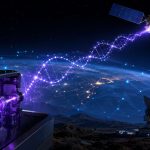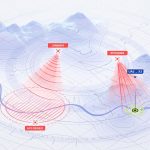
Canada is investing C$20.3 million in a new quantum defense hub in Calgary that will target technologies capable of maintaining navigation, timing and communications when conventional satellite-based systems are degraded, jammed or deliberately spoofed.
The Department of National Defence has launched the Quantum Defence Innovation Secure Hub, known as Quantum DISH, under its Bureau of Research, Engineering and Advanced Leadership in Innovation and Science, or BOREALIS. A consortium led by the University of Calgary will receive the funding over two years to establish and operate the facility.
The initiative is particularly significant for the positioning, navigation and timing sector because its mandate extends beyond protecting existing GNSS receivers. Canada is also targeting navigation technologies that can continue operating without depending on GNSS signals at all.
GNSS-Independent Navigation
Modern military systems rely heavily on GPS and other GNSS constellations for navigation, synchronization, targeting, autonomous operations and communications. That dependence becomes a vulnerability when satellite signals are unavailable or intentionally manipulated.
Quantum DISH is being established to develop, test and validate technologies designed for those contested environments. The Department of National Defence specifically identifies navigation and resilience against GPS spoofing among the areas where quantum technology could strengthen Canadian military capabilities.
Quantum sensing could eventually provide alternative navigation references using measurements of acceleration, rotation, magnetic fields, gravity or other physical phenomena. Such systems would not necessarily replace GNSS during normal operation. Instead, they could provide another layer of positioning information when satellite navigation becomes unreliable.
That distinction matters. The most practical military navigation architecture is unlikely to be purely GNSS-based or purely quantum. It will probably combine GNSS, inertial sensors, terrain or vision-based positioning, signals of opportunity and emerging quantum sensors, with the navigation system continuously evaluating which inputs can be trusted.
Fighting GPS Spoofing
Spoofing presents a different problem from conventional radio jamming.
A jammer attempts to prevent a receiver from using satellite signals. A spoofing system attempts to make the receiver calculate a believable but incorrect position or time.
That makes detection and integrity monitoring increasingly important. A navigation system must not only determine its coordinates but also establish whether the information used to calculate those coordinates can be trusted.
Quantum DISH provides Canada with an environment where these technologies can be evaluated specifically for defense applications rather than remaining isolated university research projects.
The hub will bring government, academia, industry and technology developers together in a secure setting intended to move technologies from research toward operational Canadian Armed Forces capabilities.
Four Quantum Technology Areas
The program will concentrate on four connected areas: quantum sensing, quantum communications, quantum algorithms and quantum hardware assurance.
For PNT applications, quantum sensing is likely to attract the most immediate attention, but the other areas should not be viewed separately.
Secure communications and timing become increasingly important when navigation systems operate in electronically contested environments. Algorithms are required to combine information from different sensors and identify abnormal measurements. Hardware assurance addresses another critical military requirement: ensuring that the components providing those measurements are reliable and secure.
Together, those areas point toward a broader objective than simply developing a better GPS receiver.
Canada is building infrastructure for navigation systems that can determine when GNSS should be trusted, recognize when it has been compromised and continue operating using independent sources when necessary.
From Quantum Research to Military Systems
The University of Calgary-led consortium was selected through a competitive call for proposals. Quantum DISH also expands the BOREALIS Defence Innovation Secure Hub network, joining Canada’s Maritime DISH pilot and Uncrewed Systems DISH.
This structure may prove as important as the individual technologies developed inside the facility.
Quantum navigation has received significant research attention internationally, but laboratory performance alone does not create a deployable military navigation system. Sensors must become smaller, more robust and more affordable while operating through vibration, temperature changes, electromagnetic interference and other conditions encountered aboard aircraft, vehicles, ships and autonomous platforms.
A secure test and validation environment creates an intermediate step between academic research and military procurement.
Why This Matters for PNT
The most interesting part of Canada’s investment is its emphasis on operational resilience rather than quantum technology simply as a research field.
GNSS interference is forcing navigation developers to reconsider an architecture that has worked exceptionally well for decades. Satellite navigation will remain enormously valuable, but military platforms increasingly need independent ways to verify it.
In my view, that is where projects such as Quantum DISH could have their greatest impact.
The near-term value of quantum navigation may not come from a system that completely eliminates GPS. It may come from giving an aircraft, vessel, vehicle or autonomous platform enough independent navigation information to recognize that its GNSS solution is wrong.
That transforms quantum sensing from an exotic replacement for satellite navigation into an integrity layer for resilient PNT.
If these technologies can eventually be reduced in size, cost and power consumption, the same architecture could move beyond strategic military platforms into drones, autonomous ground vehicles, maritime navigation and other systems operating where dependable positioning is critical.
About the University of Calgary and Quantum City
The University of Calgary is one of Canada’s five highest-ranked research universities by research revenue and reported a record C$632.4 million in external research revenue for fiscal 2024-25.
Its Quantum City initiative is building a quantum technology ecosystem in Alberta connecting researchers, technology developers, companies and potential users while developing infrastructure and talent intended to help move quantum technologies toward commercial applications.
The new Quantum DISH adds a dedicated defense component to that ecosystem. The University of Calgary-led consortium will receive C$20.3 million over two years, with work centered on four technology areas: quantum sensing, communications, algorithms and hardware assurance.