Belgian GNSS technology manufacturer Septentrio has successfully tracked and analyzed navigation signals transmitted by the European Space Agency’s (ESA) Celeste satellites, providing new experimental evidence that low Earth orbit (LEO) spacecraft can support dual-frequency ranging measurements.
The results, presented at ION GNSS+ 2026 in Orlando, Florida, demonstrate that Septentrio’s prototype receiver can acquire and continuously track L-band and S-band signals despite the substantial Doppler shifts and rapidly changing signal conditions associated with LEO satellites.
The achievement represents an important technical milestone in ESA’s effort to develop a supplementary navigation layer for Galileo and other medium Earth orbit (MEO) GNSS constellations. Rather than replacing existing satellite navigation systems, Celeste is designed to improve positioning, navigation, and timing (PNT) resilience through additional signals, frequencies, and orbital geometry.
ESA Celeste Tests Navigation at 510 km
ESA launched the first two Celeste demonstration satellites on March 28, 2026, aboard a Rocket Lab Electron rocket from Mahia, New Zealand.
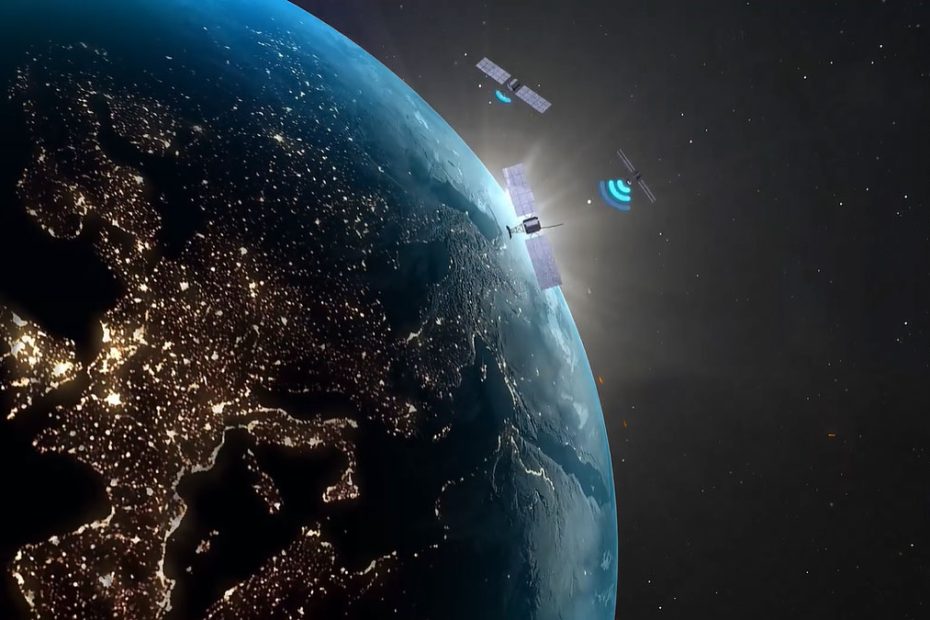
The initial spacecraft, IOD-1 developed by GMV and IOD-2 manufactured by Thales Alenia Space, operate in low Earth orbit at approximately 510 km (317 miles) above the planet.
Unlike conventional GNSS satellites, which operate thousands of kilometers above Earth, Celeste spacecraft move much closer to the surface. Their lower altitude creates opportunities for stronger received navigation signals and faster changes in satellite geometry, but also introduces considerable technical challenges for receiver design.
The demonstration is part of a larger ESA program involving 11 experimental satellites and one spare. The first two spacecraft are testing L-band and S-band navigation signals, while subsequent satellites are expected to explore additional frequencies and positioning technologies.
ESA plans to begin deploying nine additional demonstration spacecraft from 2027, expanding its ability to evaluate multi-layer navigation architectures under operational conditions.
Septentrio Receiver Tracks High Doppler Shifts
One of the main obstacles in receiving LEO navigation signals is the substantial Doppler frequency shift caused by the satellites’ high orbital velocities.
Conventional GNSS receiver architectures are optimized primarily for the dynamics of GPS, Galileo, BeiDou, and other MEO navigation systems. LEO satellites move across the sky much faster, requiring receivers to handle larger frequency variations and more rapid changes in received signal power.
Septentrio developed a prototype capable of processing two Celeste navigation signals:
- E5 in L-band, providing navigation measurements in a frequency range associated with established GNSS technology.
- SR in S-band, adding frequency diversity and enabling improved estimation of ionospheric propagation effects.
The receiver extracts pseudorange, carrier-phase, carrier-to-noise density (C/N0), and Doppler measurements from both pilot and data channels.
Before the orbital tests, Septentrio developed a hardware-based simulation environment using a Python signal generator and two synchronized software-defined radios.
During a simulated six-minute satellite pass, the receiver maintained continuous tracking while processing Doppler excursions of approximately ±27 kHz on E5 and ±56 kHz on SR.
These tests provided evidence that the receiver’s signal acquisition and tracking architecture could handle LEO orbital dynamics before live satellite transmissions became available.
Live LEO Signal Measurements Confirm Receiver Performance
The most significant results came from actual Celeste satellite transmissions received at Septentrio’s headquarters in Leuven, Belgium.
Using an active rooftop antenna designed for L-band and S-band reception, the engineering team recorded signals from Celeste IOD-1 during a satellite pass on June 10, 2026.
The spacecraft reached a minimum slant range of approximately 575 km (357 miles), with a maximum elevation of 74.6 degrees.
Measurements revealed substantial frequency variations across the pass, consistent with the Doppler dynamics expected from a fast-moving LEO satellite.
| Measurement | E5 (L-band) | SR (S-band) |
|---|---|---|
| Maximum positive Doppler | +27.4 kHz | +57 kHz |
| Maximum negative Doppler | -25 kHz | -53.3 kHz |
| Tracking result | Successful | Successful |
| Measurement types | Code, carrier, Doppler, C/N0 | Code, carrier, Doppler, C/N0 |
Received C/N0 peaked at approximately 62 dB-Hz near the satellite’s closest approach, demonstrating the strong signal levels achievable during favorable LEO passes.
The successful tracking of both frequencies confirmed that the prototype could process real orbital transmissions rather than relying exclusively on simulated satellite dynamics.
S-Band Signals Reduce Ionospheric Delay
Another important outcome involved the comparison of ionospheric effects between the two navigation frequencies.
When satellite radio signals travel through Earth’s ionosphere, charged particles introduce propagation delays that affect positioning measurements. The first-order ionospheric delay is inversely proportional to the square of the signal frequency, meaning higher-frequency signals experience less delay.
Septentrio’s measurements showed that the ionospheric delay on the SR signal was approximately 4.4 times smaller than on E5.
This result is significant because S-band signals offer an additional source of measurements with different propagation characteristics from conventional L-band navigation signals.
Combining the two frequencies also allowed Septentrio to estimate and compensate for ionospheric effects during the satellite pass.
The compensated code-minus-carrier measurements remained stable, indicating that the receiver could produce consistent observations despite changing satellite geometry and propagation conditions.
For future navigation systems, such frequency diversity could support more robust positioning algorithms, particularly when combined with conventional GNSS observations and other correction techniques.
However, reduced ionospheric delay does not automatically translate into an equivalent improvement in positioning accuracy. Overall performance also depends on satellite geometry, clock stability, orbit determination, receiver noise, and other error sources.
What Celeste Results Mean for Future GNSS
The technical significance of Septentrio’s demonstration extends beyond successfully detecting signals from two experimental satellites.
The measurements provide early hardware validation for a navigation architecture in which LEO spacecraft complement existing MEO GNSS constellations.
This approach offers several potential advantages. Lower-altitude satellites can provide stronger received signals, while their faster apparent movement introduces rapidly changing ranging geometry. Additional frequencies can also improve the diversity of observations available to navigation receivers.
For applications such as autonomous vehicles, industrial robotics, precision agriculture, and critical infrastructure timing, these capabilities could eventually improve the resilience of satellite-based positioning.
Nevertheless, the current results should be interpreted within the scope of the experiment.
Septentrio has demonstrated successful signal acquisition, tracking, and ionospheric measurement compensation. It has not yet established the positioning accuracy, availability, or continuity of a fully operational LEO navigation service.
That distinction matters because tracking an individual satellite and calculating a reliable navigation solution across a network of satellites represent different engineering challenges.
A practical LEO-PNT service will require accurate satellite orbit and clock information, sufficient constellation coverage, stable signal synchronization, and receivers capable of combining LEO observations with conventional GNSS measurements.
From a technical perspective, the most valuable aspect of the Celeste experiment is its validation of multi-frequency receiver operation under real LEO conditions. High Doppler dynamics are difficult but manageable, and the measured frequency-dependent ionospheric behavior provides a useful foundation for future multi-layer positioning algorithms.
The next decisive milestone will be demonstrating measurable improvements in actual navigation solutions, including accuracy, convergence time, availability, and performance under interference.
Until those results become available, Celeste should be viewed as a promising navigation technology demonstration rather than a commercially validated alternative to GPS or Galileo.
About Septentrio
Septentrio is a Belgian manufacturer of high-precision GNSS receivers, modules, and positioning technology headquartered in Leuven.
Founded in 2000 as a spin-off from semiconductor research organization imec, the company has accumulated 26 years of experience developing multi-frequency and multi-constellation navigation technology.
Septentrio specializes in centimeter-level positioning solutions for surveying, geodetic reference networks, precision agriculture, construction machinery, robotics, unmanned vehicles, and industrial automation.
The company had approximately 150 employees when Hexagon announced its acquisition in January 2025. At that time, Septentrio’s revenue for 2024 was expected to exceed €50 million ($52 million approximately, at early-2025 exchange rates).
Hexagon completed the acquisition on March 19, 2025, integrating Septentrio into its positioning and autonomy technology portfolio.
In addition to its Belgian headquarters, Septentrio maintains an international presence through offices in Finland, the United States, China, Japan, and South Korea. Its engineering work has included participation in European Space Agency projects and the development and testing of Galileo-compatible GNSS receivers.