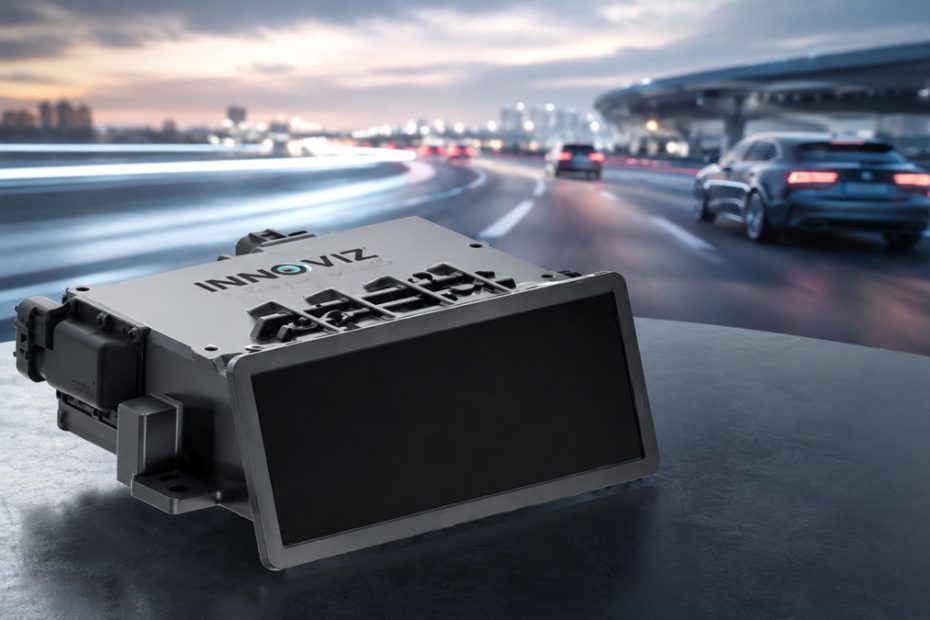
Innoviz Technologies has entered a development program with an unnamed top 10 global automotive manufacturer to create and validate a complete LiDAR-based perception stack for automated highway driving.
The project will combine the company’s InnovizTwo automotive-grade LiDAR with perception software running on an NVIDIA-powered computing platform. The resulting system will be designed for a defined highway operational design domain, or ODD, and may be considered for future vehicle programs from the automaker.
Although Innoviz has not disclosed the customer’s identity, the description of the company as a top 10 global automotive OEM makes the program strategically important. It places Innoviz beyond the role of a component supplier and gives it responsibility for developing a larger part of the automated-driving perception chain.
Highway LiDAR Perception Stack
An operational design domain defines the conditions under which an automated-driving system is designed to function. These conditions may include specific road types, vehicle speeds, geographic areas, weather conditions, traffic environments and lighting situations.
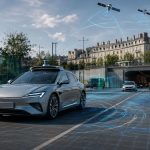
For this project, Innoviz will focus on highway operation, where automated vehicles must detect objects at long range while processing rapidly changing scenes at high speed.
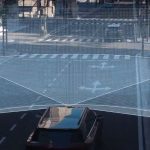
The system will use data from the InnovizTwo sensor to generate a real-time three-dimensional representation of the environment. Innoviz will then apply its perception algorithms to identify drivable space, detect hazards and classify surrounding road users.
The planned software functions include Point Cloud Plus, obstacle detection, object detection and object classification.
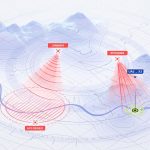
Point Cloud Plus analyzes the LiDAR scene at pixel level and determines whether each measured area represents drivable space or an obstacle. This can help identify road debris that may be difficult for conventional vision systems to interpret reliably, including loose tires, dropped cargo and pallets.
The object-detection layer will locate vehicles, pedestrians and other road users within the LiDAR field of view. The classification software will then separate those detections into categories such as passenger cars, trucks, pedestrians and two-wheelers.
InnovizTwo LiDAR Specifications
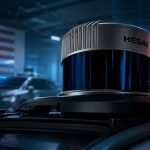
InnovizTwo Long-Range is designed for Level 3 and Level 4 automated-driving applications. According to Innoviz, the sensor can provide detection from approximately 0.5 to 300 meters, a maximum 120-degree horizontal by 43-degree vertical field of view and angular resolution as fine as 0.05 by 0.05 degrees.
The sensor can operate at 10 or 20 frames per second and is designed for temperatures ranging from minus 40 to 85 degrees Celsius. Its ability to produce multiple reflections from a single laser pulse is intended to improve perception through rain, snow, fences and other partially transparent or obstructing environments.
Innoviz also offers an optional automotive-grade perception platform that can provide classification and detection outputs alongside raw point-cloud information.
For highway automation, these specifications matter because the vehicle needs sufficient range to identify hazards early enough for controlled braking or lane changes. High angular resolution is equally important when the system must distinguish a small object on the pavement from the road surface at a distance.
NVIDIA-Powered Vehicle Computing
The Innoviz software will run on NVIDIA-powered hardware, although the companies have not identified the exact processor or vehicle computing platform selected for the program.
The choice indicates that Innoviz is developing the system for a centralized automotive computing architecture rather than limiting perception processing to the sensor itself.
This approach allows LiDAR information to be combined with data from cameras, radar, vehicle-motion sensors and digital maps. A central processor can then use these inputs to build a more complete environmental model for planning and control.
At the same time, central processing raises demanding requirements for data bandwidth, latency, synchronization and thermal management. A production-ready system must deliver consistent perception results with predictable timing, not simply demonstrate accurate detection in selected test scenes.
From LiDAR Hardware to Software
The most significant part of this announcement is not the InnovizTwo sensor itself. Innoviz has already secured or announced automotive programs involving Volkswagen, Mobileye and Daimler Truck.
The important change is that Innoviz is being asked to develop and validate a complete highway perception stack.
Automakers have traditionally divided automated-driving systems among sensor suppliers, semiconductor companies, perception developers and vehicle-control specialists. That arrangement gives manufacturers flexibility, but it can also create difficult integration problems when the hardware and software are developed separately.
Innoviz is positioning itself as a supplier that can jointly optimize the LiDAR hardware, point-cloud processing and object-perception layers.
This could shorten development cycles because the sensor configuration can be adjusted around the software requirements, while the algorithms can be trained around the sensor’s actual scanning behavior, resolution and noise characteristics.
Technical Analysis
In my view, this project is more commercially meaningful than a conventional LiDAR evaluation agreement, but it should not yet be treated as a production contract.
Innoviz has been selected to perform real development and validation work, which indicates that the automaker sees value in the company’s combined hardware and software capabilities. However, the stated purpose is to explore possible use in future OEM programs. The collaboration could still end after the evaluation stage without progressing to series production.
The program also reflects a broader change in the LiDAR market. Sensor manufacturers can no longer compete only on detection range, resolution or unit cost. Automakers increasingly want usable perception outputs that can be integrated into their automated-driving platforms with less engineering effort.
That creates an opportunity for vertically integrated suppliers, but it also increases their responsibility. Innoviz will need to prove that its software handles rare and difficult highway scenarios, including stationary objects, unusual cargo, partial occlusion, construction zones, motorcycles, emergency vehicles and degraded weather conditions.
The final test will not be whether the system produces an impressive point cloud. It will be whether it can deliver stable, explainable and safety-relevant perception outputs across millions of miles of varied driving data.
Automotive Programs Expand
Innoviz said in its latest financial update that its programs with Volkswagen, Mobileye and Daimler Truck remain on track toward start of production.
The Volkswagen ID. Buzz autonomous-driving program based on the Mobileye Drive platform uses nine LiDAR sensors and is being tested in cities including Los Angeles, Orlando, Austin, Munich, Hamburg and Oslo. Innoviz also estimates that Mobileye’s planned robotaxi activity could represent an additional opportunity of approximately 150,000 LiDAR units beyond its existing programs, although those potential volumes remain dependent on future platform and customer decisions.
The new top 10 OEM project gives Innoviz another route into future passenger-vehicle programs and demonstrates that automakers are evaluating LiDAR suppliers not only for sensing hardware but also for core perception functions.
About Innoviz Technologies
Innoviz Technologies was founded in Israel in 2016 and is listed on Nasdaq under the ticker INVZ. The company develops automotive-grade LiDAR sensors and perception software for automotive, industrial, security, robotics, mapping and defense applications.
Innoviz reported record quarterly revenue of $18.1 million for the second quarter of 2026, compared with $9.7 million in the same period of 2025. Operating expenses reached $19.1 million, while the company recorded a quarterly net loss of approximately $18.5 million.
Liquidity stood at about $48.5 million on June 30, excluding approximately $30 million in gross proceeds from a registered direct offering completed on July 29. Innoviz continues to target full-year 2026 revenue of $67 million to $73 million and two to three new program wins.
The company’s current portfolio includes several InnovizTwo configurations, the next-generation InnovizThree sensor under development and specialized sensing products for security, defense and other Physical AI applications.
Source: innoviz.tech