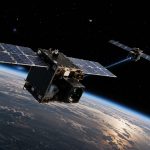
The European Union has officially taken full ownership of a key ground infrastructure asset supporting the Galileo satellite navigation network, marking another step in Europe’s effort to strengthen control over its strategic space capabilities.
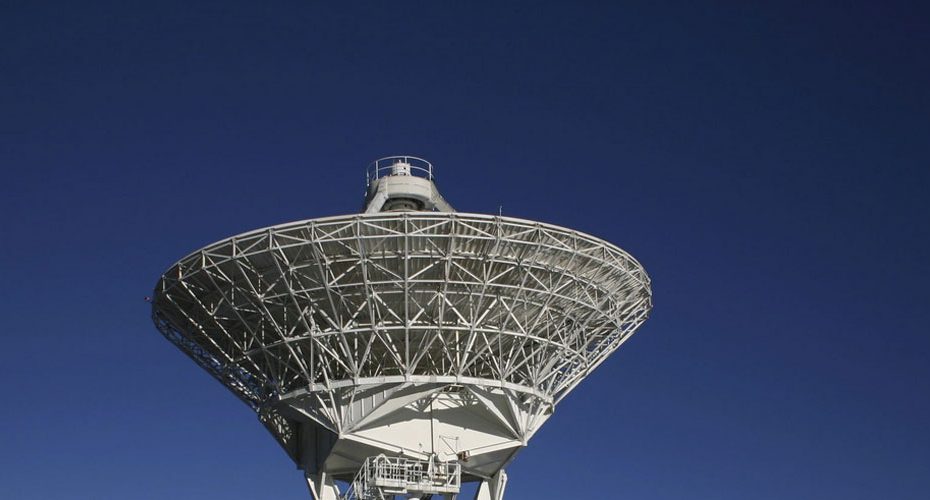
The transfer concerns the RED-1 Telemetry, Tracking and Control antenna, located at the European Space Security and Education Centre in Redu, Belgium. The ownership handover was formalized on May 29 through agreements signed by the European Commission, the European Space Agency (ESA), and the Kingdom of Belgium.
RED-1 Antenna Joins EU Space Programme Assets
Under the agreement, ESA transferred ownership of the RED-1 TT&C antenna directly to the Galileo component of the EU Space Programme.
The facility is responsible for telemetry, tracking, and control operations that help monitor satellites, maintain orbital positioning, and ensure the reliable operation of Galileo services. While satellites often receive most public attention, ground control infrastructure remains one of the most critical parts of any navigation network.
A second agreement ensures the long term hosting of the antenna at the European Space Security and Education Centre in Redu, which has become one of the key operational hubs supporting Europe’s space activities.
Galileo Strengthens European Space Independence
The ownership transfer reflects a broader trend within European space policy. Galileo was originally developed to provide Europe with an independent alternative to foreign satellite navigation systems, reducing reliance on GPS and other global networks.
As navigation services become increasingly important for aviation, maritime transport, emergency response systems, telecommunications, power grids, financial networks, autonomous vehicles, and precision agriculture, direct control over supporting infrastructure has become a strategic priority.
The move also simplifies governance by placing another important operational asset directly under EU ownership rather than relying on shared management structures.
Ground Infrastructure Becomes a Strategic Asset
The most significant aspect of this announcement is not the antenna itself but what it represents. Europe is increasingly treating space infrastructure the same way governments view energy networks, semiconductor production, and critical communications systems.
Satellite navigation is now deeply embedded in economic activity. A disruption to timing and positioning services can affect everything from mobile networks and banking transactions to logistics operations and autonomous machinery. By consolidating ownership of operational assets like RED-1, the EU is strengthening its ability to manage and protect critical infrastructure independently.
This suggests future investments may focus not only on new satellites but also on expanding European control over the ground systems that keep those satellites functioning.
Why the Redu Antenna Matters
Unlike navigation satellites that broadcast positioning signals, TT&C facilities act as the operational backbone of a satellite constellation. They allow operators to communicate with spacecraft, upload commands, monitor performance, and respond to technical issues.
Without reliable telemetry and control stations, even the most advanced satellite network would quickly become vulnerable to service interruptions.
For Galileo, the Redu facility represents one of the essential links between the satellites in orbit and the operators responsible for keeping the system running.
About Galileo
Galileo is Europe’s civilian global navigation satellite system and one of the world’s most advanced positioning networks. The system serves more than 4 billion users worldwide and provides positioning, navigation, and timing services across transportation, agriculture, telecommunications, emergency response, and industrial applications. Galileo currently operates a constellation of more than 30 satellites and is designed to provide Europe with independent access to critical navigation infrastructure.