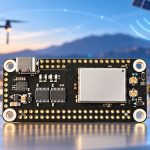
HYFIX Spatial Intelligence has officially introduced the new H1P Positioning, Navigation, and Open Compute Module, targeting the rapidly expanding market for small unmanned aircraft systems, robotics platforms, and autonomous machines. The company is showcasing the platform during AUVSI XPONENTIAL 2026, where interest in secure domestic drone electronics remains extremely high due to growing geopolitical and supply chain concerns.
What makes the H1P particularly important is that HYFIX is not positioning this as a traditional GNSS receiver alone. Instead, the company is trying to consolidate several critical drone subsystems into a single compact module that handles navigation, positioning, onboard compute, and sensor fusion simultaneously.
That approach follows a broader industry trend where drone manufacturers increasingly want fewer independent electronic boards inside aircraft. Smaller UAVs are becoming constrained by power consumption, wiring complexity, electromagnetic interference, thermal management, and weight distribution. Highly integrated modules like the H1P can reduce those problems while also simplifying production and maintenance.
H1 Autonomous Systems Chip
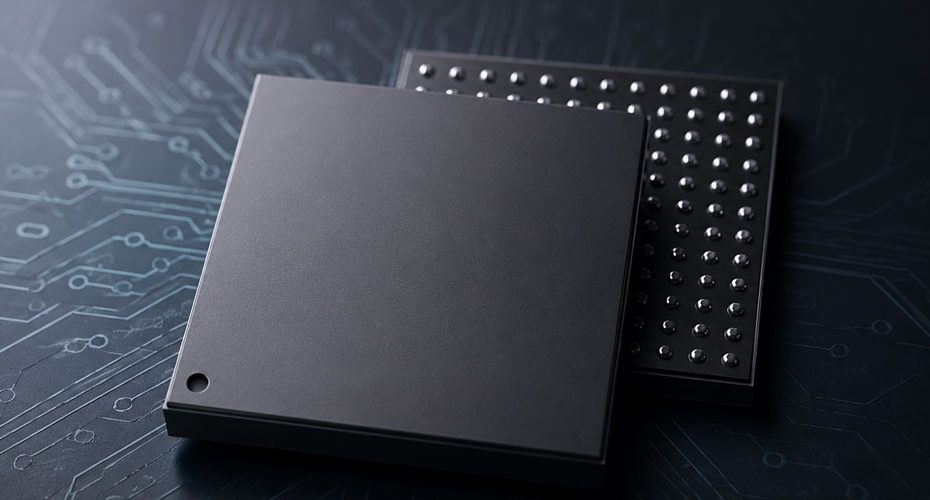
At the center of the H1P is the proprietary H1 Autonomous Systems Chip developed by HYFIX. According to the company, the architecture is designed to replace multiple standalone drone electronics with a unified processing platform.
The module supports the PX4 ecosystem and operates on the NuttX real time operating system, making it relevant for developers already working within open autonomy frameworks.
Physically, the module is extremely compact at 17 × 22 mm and uses a surface mount form factor intended to remain compatible with many existing GNSS module footprints already used across the UAV industry. That matters because redesigning drone PCBs around entirely new module dimensions can significantly slow adoption.
HYFIX has confirmed dual RF ports with native dual antenna GNSS capability and more than 800 hardware tracking channels. While the company has not publicly disclosed every supported frequency band or constellation detail yet, the module is designed to support major global GNSS constellations alongside newer low Earth orbit positioning signals.
LEO Navigation Signals
One of the more technically interesting aspects of the H1P is support for emerging LEO navigation services, particularly signals from Xona Space Systems and its Pulsar system.
The industry is paying increasing attention to LEO based navigation because traditional GNSS signals arriving from medium Earth orbit satellites are relatively weak and vulnerable to jamming or spoofing. LEO constellations can provide much stronger signals with lower latency and potentially improved resilience in contested environments.
For military drones, industrial robotics, and infrastructure inspection aircraft operating near interference sources, this is becoming a major design priority rather than an optional feature.
HYFIX also states that the H1P integrates IMU sensor fusion together with correction services from GEODNET for RTK level positioning and additional anti spoofing resilience. However, the company has not yet published detailed positioning accuracy specifications, update rates, or IMU performance metrics.
Supply Chain Security
Another major angle behind this launch is supply chain localization.
The U.S. drone industry continues to depend heavily on foreign electronics suppliers, especially in navigation, communications, and flight control hardware. Regulatory pressure has intensified following restrictions connected to the FCC Covered List and broader concerns surrounding infrastructure security and sensitive aerial data collection.
HYFIX is clearly positioning the H1P as part of a larger push toward domestically designed autonomous systems hardware that can support scalable American drone manufacturing.
From a market perspective, this could become increasingly important not only for defense applications, but also for public safety drones, utility inspection fleets, industrial automation systems, and critical infrastructure operators seeking compliant hardware supply chains.
Why This Launch Matters
Technically, the H1P reflects where the unmanned systems market is heading.
Modern autonomous platforms no longer treat navigation, compute, and flight control as isolated functions. Instead, manufacturers increasingly want tightly integrated architectures capable of combining GNSS, inertial sensing, onboard processing, and resilient positioning technologies inside highly compact modules.
If HYFIX can deliver reliable real world performance together with scalable manufacturing, the H1P could become attractive for developers looking to reduce integration complexity while improving resilience against jamming and degraded navigation conditions.
The inclusion of open compute resources also suggests the module may support more advanced edge autonomy applications in the future, including onboard perception processing, adaptive navigation logic, and custom mission applications directly at the module level.
About HYFIX
HYFIX Spatial Intelligence is a Santa Clara, California based semiconductor startup founded in 2022 that focuses on building American made autonomous systems chips for drones, robotics, and emerging physical AI platforms. The company develops highly integrated system on chip architectures that combine flight control, resilient positioning, wireless communications, and onboard compute into a single low power platform.
HYFIX has become increasingly visible in the U.S. drone and defense technology ecosystem due to its focus on reducing dependence on foreign electronics suppliers, particularly in the UAV navigation and flight control market. In April 2026, the company announced a $15 million seed funding round led by Craft Ventures with participation from Catapult Ventures, Multicoin Capital, Finality Capital, and technology investor Sky Dayton.
The company is also closely connected to GEODNET infrastructure for centimeter level positioning and is actively developing resilient navigation technologies designed for GPS degraded and contested environments. HYFIX currently supports open autonomy ecosystems including PX4, ArduPilot, and ROS 2, positioning the company toward both commercial and defense autonomous systems markets.